

If you just moved to New York City and you’re trying to figure out Pediatric Dentistry NYC: The Complete Parent Guide, welcome to the club. NYC is big, busy, and full of options, and knowing who to trust with your kid’s teeth isn’t always obvious. The short answer is: your child should see a pediatric dentist in NYC by their first birthday, or within 6 months of getting their first tooth, whichever comes first.
This Pediatric Dentistry NYC: The Complete Parent Guide covers everything you need to know as a parent navigating dental care in the city. When to start, what to expect at each age, how a pediatric dentist is different from a regular one, what to do about dental anxiety, NYC insurance coverage, what to do in a dental emergency, and a bunch of things most dental websites don’t even talk about, like teething, diet, the NYC school dental exam law, and at-home care by age. Think of it as the guide we wish every NYC parent had before their child’s first visit.
What Exactly Is a Pediatric Dentist, and Are They Really Different?
Honestly, yes, very different. A pediatric dentist is a dental specialist who completes 2–3 additional years of training after dental school, focused entirely on children. Not adults, not seniors, just kids, from newborns through teenagers. That training covers child psychology, behavior management, how growing jaws develop, and how to handle everything from a scared 2-year-old to a teenager who “hates the dentist.”
Here’s what most parents don’t realize: it’s not just about knowing how to clean small teeth. It’s about understanding how a 3-year-old processes fear differently from a 9-year-old. It’s knowing that the tiny habits kids form right now- how they sleep, breathe, eat, and hold their tongue, affect their jaw development for years. General dentists don’t get that training. Pediatric dentists do.
| Feature | Pediatric Dentist | General Dentist |
|---|---|---|
| Extra training after dental school | 2–3 years, children only | None for child-specific care |
| Office environment | Kid-friendly, colorful, fun | Standard adult setup |
| Behavior management | Specially trained | Limited child techniques |
| Equipment size | Child-sized tools + chairs | Adult-sized equipment |
| Age range | Infants through age 18 | Typically adults |
| Medicaid / Child Health Plus (NYC) | Most enrolled providers | Varies by practice |
| Airway & developmental monitoring | Yes, part of the training | Rarely |
Your Child’s Dental Milestones by Age: The Guide Nobody Gives You
Here’s the thing about kids’ dental care: what’s “normal” changes a lot between age 1 and age 17. Most parents don’t realize that until something surprises them. So here’s the full age-by-age breakdown: what’s happening in your child’s mouth, what to watch for, and what we do at each stage.
Age 0–12 Months: Before and During Teething
Even before teeth appear, oral health matters. After feedings, wipe your baby’s gums with a clean, damp washcloth to remove bacteria that can harm emerging teeth. The first tooth usually arrives somewhere between 6 and 10 months, though some babies get them earlier and some later. Both are fine. When that first tooth appears, two things should happen: start brushing it (yes, right away), and also time to schedule that first visit to the dentist.
For brushing, use a soft infant toothbrush and a tiny smear of fluoride toothpaste, think of a grain of rice. That’s all. Not a full stripe, not a pea-size amount. A grain of rice. The reason? Babies often swallow toothpaste, and excessive fluoride at a young age can be harmful. A grain-of-rice amount is safe even if swallowed entirely.
Age 1–3: The Toddler Years
This is prime time for something called tooth-colored fillings, also known as baby bottle tooth decay. It’s the most common chronic childhood disease in the US, and it starts early. The main culprit is putting a child to bed with a bottle of milk or juice. The sugars sit on the teeth overnight and quietly eat away at the enamel. At that stage, treatment often involves tooth-colored fillings to restore the tooth. The fix is simple: the bedtime bottle should always be water. If your child won’t take water at first, gradually dilute the milk or juice over a few days until it’s plain water.
Thumb sucking and pacifier use are also common at this age. A little of both is totally normal, but if it’s still going strong past age 3, it can start affecting the shape of the jaw and how teeth come in. We’ll talk to you about it at checkups, but no pressure. Most kids drop the habit on their own between 2 and 4.
The amount moves up to pea-sized at age 3. Kids this age still need a parent to brush for them; their fine motor skills aren’t developed enough to do it properly on their own, even if they insist they can.
Age 4–6: The Big Kid Teeth Start Arriving
Around age 5 or 6, the first permanent molars start coming in at the back of the mouth. They arrive before the baby teeth fall out, so some kids (and parents) don’t even realize they’re permanent. These are important teeth. They set the foundation for how the rest of the adult teeth come in and align. We put sealants on these molars as soon as they’re in, because the grooves in them are deep and perfect hiding spots for cavities.
This is also the age we start X-rays if we haven’t already. First X-rays are usually around age 4–6, depending on the child. And it’s right around age 6–7 when the bottom front teeth start to wobble and fall out, which feels very exciting to kids and mildly alarming to first-time parents. Completely normal.
Age 7–10: The Mixed Dentition Phase
This is what dentists call the “mixed dentition” phase. The mouth has a mix of baby teeth and permanent teeth, and it looks a bit chaotic. Gaps, crowded teeth, one tooth coming in behind another. Totally normal. But this is also the ideal age for an orthodontic evaluation, even if everything looks fine. The reason? Bite problems and jaw development issues are far easier to address while the jaw is still growing.
The American Association of Orthodontists recommends an orthodontic evaluation at age 7. That doesn’t mean braces at 7; most kids just come back for monitoring. But some do benefit from early treatment using braces and clear aligners for kids, like expanders or simple appliances that guide jaw growth while the bone is flexible.
Age 11–13: The Teenage Transition Begins
By age 12, most children have all their permanent teeth, except wisdom teeth, which arrive later. The second set of adult molars comes in around age 12, and we seal those, too. This is also a common age for braces or clear aligners to start, if orthodontic treatment was identified earlier.
This age group is also where oral hygiene often takes a hit. Life gets more independent, parents are checking less, and suddenly flossing hasn’t happened in three months. We see this all the time. The good news is that it’s also the age when kids start to actually care about how their smile looks, which becomes its own motivation. We lean into that.
Age 14–18: Teen Dental Care
Wisdom teeth start developing somewhere in the mid-to-late teens, and they become visible on X-rays well before they erupt. We monitor them closely. Not all wisdom teeth need to come out, but many do, especially in a city like New York, where people tend to have smaller jaws and less room for four extra teeth. Sports injuries are also common at this age, and we strongly recommend mouthguards for any teen in contact sports.
One more thing: teens who play wind instruments, have braces, or grind their teeth (bruxism) at night have specific dental concerns that we take seriously. Night grinding is more common than most people realize in this age group, often stress-related, and a custom night guard can prevent a lot of long-term damage.
| Age Range | What’s Happening | What We Do | Parent Action |
|---|---|---|---|
| 0–12 months | First tooth arriving | First exam, gum check | Wipe gums, first visit by age 1 |
| 1–3 years | Baby teeth are filling in | Check decay, fluoride varnish | Grain-of-rice toothpaste; no bedtime bottles |
| 4–6 years | First permanent molars + first X-rays | Sealants on molars, X-rays | Brush for them; pea-sized toothpaste |
| 7–10 years | Mixed baby + adult teeth | Ortho eval, sealants, monitoring | Help with flossing; ortho consult |
| 11–13 years | All adult teeth except wisdom | Braces evaluation, 2nd molar sealants | Independence + accountability check |
| 14–18 years | Wisdom teeth developing | Wisdom tooth monitoring, mouthguards | Sports mouthguard; night guard if grinding |

What About Teething? What’s Normal and What Isn’t?
And some later. The bottom front teeth usually come in first, followed by the top front teeth, then the lateral incisors, then the first baby molars, then the canines, then the second molars. Most children have all 20 of their baby teeth by the age of 3.
Normal teething symptoms include drooling (a lot of it), gnawing on things, fussiness, and slightly swollen gums. A low-grade temperature can happen, but a true fever above 100.4°F is not a teething symptom that needs a pediatrician, but a teething ring. Same with diarrhea. Teething doesn’t cause those.
What actually helps: cold (not frozen) teething rings, gently rubbing the gums with a clean finger, or a cold, damp washcloth. Skip the over-the-counter benzocaine gels; the FDA has warned against them for children under 2 because they can cause serious side effects. Plain and simple, the safest and most effective teething aids are cold and pressure.
Call your dentist if you notice teeth coming in at very unusual angles, large gaps between teeth, or no sign of teeth at all by 15 months. It doesn’t always mean something is wrong, but it’s worth a look.

Diet and Your Child’s Teeth: What NYC Parents Really Need to Know?
Sugar is the obvious answer, but it’s not the whole story. The real issue is frequency, how often teeth are exposed to sugar, not just how much. A child who sips juice slowly over two hours causes more damage than one who drinks the same amount of juice all at once with a meal. Every time sugar hits the teeth, bacteria produce acid that attacks enamel. That attack lasts about 20–30 minutes. Sip juice all afternoon, and you’re basically running a 20-minute acid cycle on repeat.
The sneaky offenders in NYC kids’ diets include: granola bars (often 10+ grams of sugar), dried fruit (sticks to teeth and sugar-loads them for hours), sports drinks (extremely acidic, even the “healthy” ones), and crackers or pretzels (starches turn to sugar and stick in grooves). None of these are worth banning, just best eaten at mealtimes. In the early stages of decay, we may also use silver diamine fluoride (SDF) to stop cavities without drilling, followed by water and ideally a quick brush.
What actually protects teeth: dairy products (cheese, especially, neutralizes acid and delivers calcium), crunchy vegetables, nuts, and, most importantly, plain water. This brings us to an NYC-specific fact most parents don’t know.

Did You Know? NYC Tap Water Has Fluoride
New York City has been adding fluoride to its tap water since 1965. That means your child is getting cavity-fighting fluoride every time they drink from the tap. This is a big deal. Studies show that community water fluoridation reduces cavities in children by 25–30% on average. So if your child drinks NYC tap water regularly, that’s quietly working in their favor. Bottled water, on the other hand, has no fluoride. Kids who drink mostly bottled water miss out on this benefit, something worth discussing at your child’s next checkup.
Sports Mouthguards: Every NYC Kid Who Plays Sports Needs One
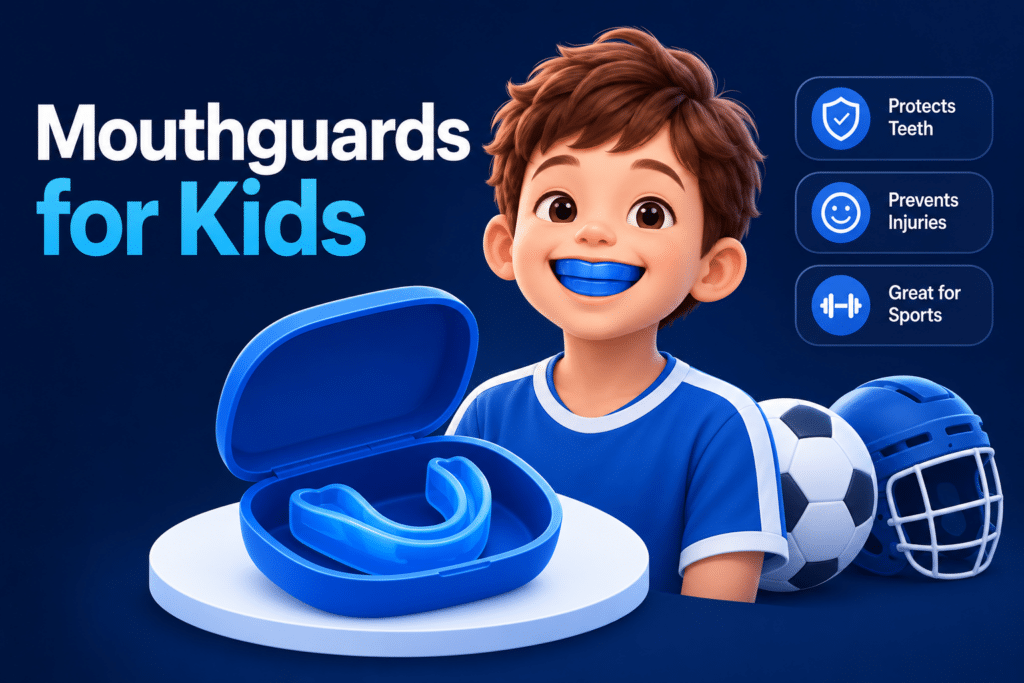
Dental injuries are one of the most common sports-related injuries in kids. A knocked-out or broken tooth can mean years of dental work and thousands of dollars in repairs. A custom-fit mouthguard costs a fraction of that and takes about two visits to make.
This matters especially in NYC, where kids play soccer, basketball, baseball, hockey, and martial arts year-round. The American Dental Association recommends mouthguards for any sport where contact or falls are possible, which, honestly, is most of them. Stock mouthguards from a sporting goods store offer some protection but don’t fit well and can actually be less safe because kids tend to clench or not wear them properly.
At Smiley Faces Dental, we make custom-fit sports mouthguards for kids and teens. They fit comfortably, stay in place, allow normal breathing and speaking, and can be made in your child’s favorite color or team colors. If your kid plays any sport, ask us about it at the next visit.

What to Do If Your Child’s Tooth Gets Knocked Out: Emergency Guide for Parents in NYC
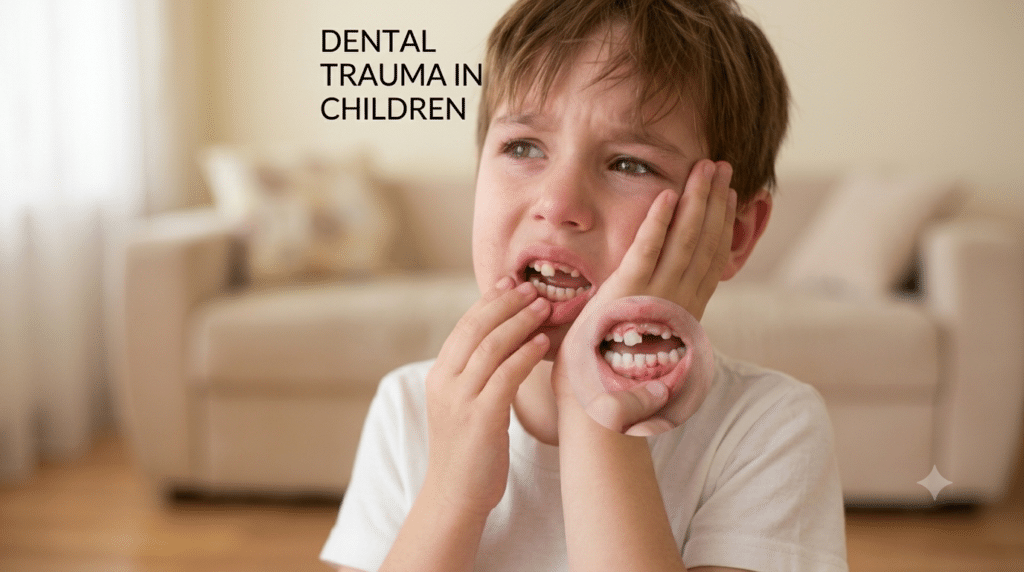
Dental emergencies in kids usually happen fast: a fall on the playground, a collision in a game, biting down on something hard. Knowing what to do in the first 15 minutes can be the difference between saving a tooth and losing it permanently.
Knocked-Out Permanent Tooth
Pick it up by the crown (the white part), never by the root. If it’s dirty, rinse it gently with milk or saline, not tap water, not rubbing it, not scrubbing it. If your child is old enough and won’t swallow it, try to slide it back into the socket and have them hold it there. If not, keep it in a cup of cold milk or your child’s saliva. Call us immediately; a knocked-out permanent tooth has the best chance of being saved within 30–60 minutes.
Call Us Immediately
Knocked-Out Baby Tooth
Don’t try to replant it; putting a baby tooth back can damage the developing permanent tooth underneath. Call us so we can assess whether a tooth extraction or space maintainer is needed to keep room for the permanent tooth.
Chipped or Cracked Tooth
Rinse the mouth with warm water. If there’s swelling, a cold compress helps. Save any pieces of the tooth if you can find them. Call us the same day. Chips can often be repaired quickly and, in some cases, may require dental crowns for children to protect the tooth, but cracks need to be evaluated to make sure the nerve isn’t involved. If the nerve is affected, pulp therapy may be required to save the tooth.
Toothache
Rinse with warm water and gently floss around the tooth; sometimes it’s just food stuck between teeth. If the pain continues, call us. Don’t put aspirin directly on the tooth or gum; that can cause a chemical burn.

What Is the NYC School Dental Exam? What Parents Need to Know
Here’s something most NYC parents don’t know until the school sends home a notice: New York City requires dental examinations for children in kindergarten, 3rd grade, and 7th grade. It’s part of the NYC Health Code, and it applies to all NYC public school students. The purpose is to catch dental problems that might affect a child’s ability to eat, speak, concentrate, and learn.
The requirement is a dental exam performed by a licensed dentist; it can’t just be a school nurse check. Parents need to submit proof of the exam to the school within the required timeframe. If a child doesn’t have a regular dentist, the school provides options for low-cost or free exams through NYC Health + Hospitals and partner clinics.
If your child is in kindergarten, 3rd grade, or 7th grade this year, this is worth putting on your to-do list now, not the week before the deadline. At Smiley Faces Dental, we see a lot of families who come in specifically for the school exam requirement, and we’re happy to provide the documentation the school needs. Just mention it when you book.
When Should My Child First See a Dentist?
By their 1st birthday, or within 6 months of getting their first tooth. We know that seems early. Most people hear “age 1” and think “they barely have any teeth, why bother?” But those early visits aren’t really about cleaning or any treatment. They’re about establishing a relationship, catching any early issues, and teaching you as a parent what to look for at home. The earlier you start, the easier it stays.
What Actually Happens at a Kids’ Dental Visit in NYC?
At our offices, the first thing your child notices is that it doesn’t look like a boring adult doctor’s office. Bright colors, kid-friendly decor, and a team that speaks directly to your child, not over their head. For little ones, we use a “knee-to-knee” exam where the parent sits facing the dentist, and the child leans back, staying close to you the whole time.
A routine visit includes a routine exam and cleanings, a check for early signs of tooth decay, a look at how the jaw is developing, X-rays if needed, a fluoride treatment, and a conversation about what we’re seeing and what to watch at home. If your child’s teeth have grooves where cavities like to hide, we might recommend dental sealants, a thin protective coating that takes about 5 minutes and can prevent cavities for years.
How Frequently Should My Child Visit the Dentist?
Twice a year is the standard for routine dental exams and cleanings. Some kids with higher cavity risk come every 3–4 months. Baby teeth matter more than most parents think; they hold space in the jaw for the permanent teeth behind them. Losing a baby tooth too early because of decay can cause crowding issues that take years and braces to fix.
Does Insurance Cover Pediatric Dental Care in NYC?
Yes, pediatric dental care in NYC is often covered by insurance, but the details depend on the type of plan your child has. The good news is that New York has some of the strongest dental coverage options for children in the U.S., which means most families can access care without major out-of-pocket costs. You have access to a wide range of insurance companies that can meet your needs.

Sun Life
Sun Life Financial offers comprehensive dental insurance. Their focus is on preventive care and coverage for basic to major restorative services. Plans often feature “Preventive Rewards” that add to annual maximum benefits based on usage. A large national provider network helps reduce out-of-pocket costs for check-ups, X-rays, fillings, and root canals.
Cigna
Cigna’s dental insurance plans cover various services, including diagnostic exams, preventive cleanings, restorative treatments, orthodontics, gum disease treatment, and extractions. They emphasize preventive care with lower deductibles and higher benefits, along with a large provider network.
Low Deductible Plans
Affordable dental insurance for you and your family.
High Annual Maximum Plan
More robust coverage, higher benefits.
Bundled Plans
Dental plus coverage for vision, or vision and hearing.
Guardian
Guardian Dental Insurance offers comprehensive coverage designed to enhance the accessibility and affordability of dental care. The plans include benefits for both routine preventive checkups and unanticipated dental procedures. Additionally, the insurer provides access to an extensive network of dentists and a mobile application for claim management, provider searches, and digital identification card access.
What If My Child Is Scared of the Dentist?
Dental anxiety in kids is completely normal, and pediatric dentists are specifically trained to handle it. A few things that really work: we use kid-friendly language (no scary words like “needle” or “drill”), we give kids a sense of control by letting them ask questions and look at tools first, and for kids with significant anxiety, we offer sedation dentistry for kids, including nitrous oxide (laughing gas), completely safe, wears off immediately, and makes the whole visit much more comfortable.
If your child has had a bad experience before, we go at your child’s pace. No rushing, no forcing. Families across NYC come to us specifically because they know we won’t push, and usually after a couple of visits, even the most nervous kids settle in and stop dreading it.
How Do You Prepare Your Child for Their First Dental Visit?
The first dental visit should be kept simple and positive. Don’t say “it won’t hurt”, that plants the idea of pain before they’ve even thought about it. Read books about dentist visits for ages 2–5, play pretend dentist at home with a toothbrush, and frame it as normal. On the day, arrive a few minutes early, bring a comfort item if that helps, and celebrate it afterward. You’re building a positive association that lasts for years.
FAQ: Questions NYC Parents Ask Us All the Time
1. When should my child first see a dentist?
By their first birthday, or within 6 months of the first tooth, whichever comes first. Starting early sets the foundation for healthy teeth for life.
2. What’s the difference between a pediatric dentist and a regular dentist?
Pediatric dentists complete 2–3 extra years of specialty training focused entirely on children, covering development, behavior, and dental issues specific to growing mouths. General dentists don’t have that specialization.
3. How often does my child need a dental checkup?
Twice a year is standard. Some children with higher cavity risk may need to be seen every 3–4 months. Your dentist will tell you what’s right for your child.
4. Does Medicaid in NYC cover pediatric dental care?
Yes. New York Medicaid covers dental care for children up to age 19. Child Health Plus also provides comprehensive dental coverage for qualifying kids. We accept both at all Smiley Faces Dental NYC locations.
5. What are the signs of tooth decay from a baby’s bottle?
White or brown spots on the front teeth are the most common early signs. The front top teeth are most affected because they’re exposed to whatever is in the bottle. If you notice discoloration, book a visit soon; caught early, it’s very manageable.
6. Does NYC tap water have fluoride?
Yes. New York City has fluoridated its water supply since 1965. Kids who drink tap water regularly are getting an ongoing source of cavity protection. Kids who drink mostly bottled water miss this benefit.
7. What’s the NYC school dental exam requirement?
NYC Health Code requires dental exams for children in kindergarten, 3rd grade, and 7th grade. Parents must submit proof of the exam to the school. Smiley Faces Dental can provide the required documentation after your child’s visit.
8. At what age should kids start seeing an orthodontist?
Age 7 is the recommended age for an orthodontic evaluation, even if everything looks fine. The earlier bite and jaw issues are spotted, the more treatment options are available, and the simpler those treatments tend to be.
9. What do I do if my child’s tooth gets knocked out?
For a permanent tooth: pick it up by the crown (not the root), rinse gently with milk, try to re-insert it or store it in milk, and call us immediately. Time is critical; the best outcomes happen within 30–60 minutes. For a baby tooth: don’t replant it; just call us to check if a space maintainer is needed.
Ready to Book Your Child’s Next Visit?
Finding the right pediatric dentist in NYC doesn’t have to be complicated. Whether your child is 9 months old or 16, whether it’s their very first visit or they haven’t been in a few years, we’re here for it, without judgment.
Smiley Faces Dental has a location in New York City at 35-38 Junction Blvd, Ste B, Corona, NY 11368, designed specifically for kids and families. Our team is experienced in handling nervous children, wiggly toddlers, eye-rolling teenagers, and everything in between. At Smiley Faces Dental, we believe that understanding and using your dental insurance should be straightforward. Our team works closely with families to help maximize their benefits and reduce out-of-pocket costs, ensuring that your child receives the necessary care without added stress.