
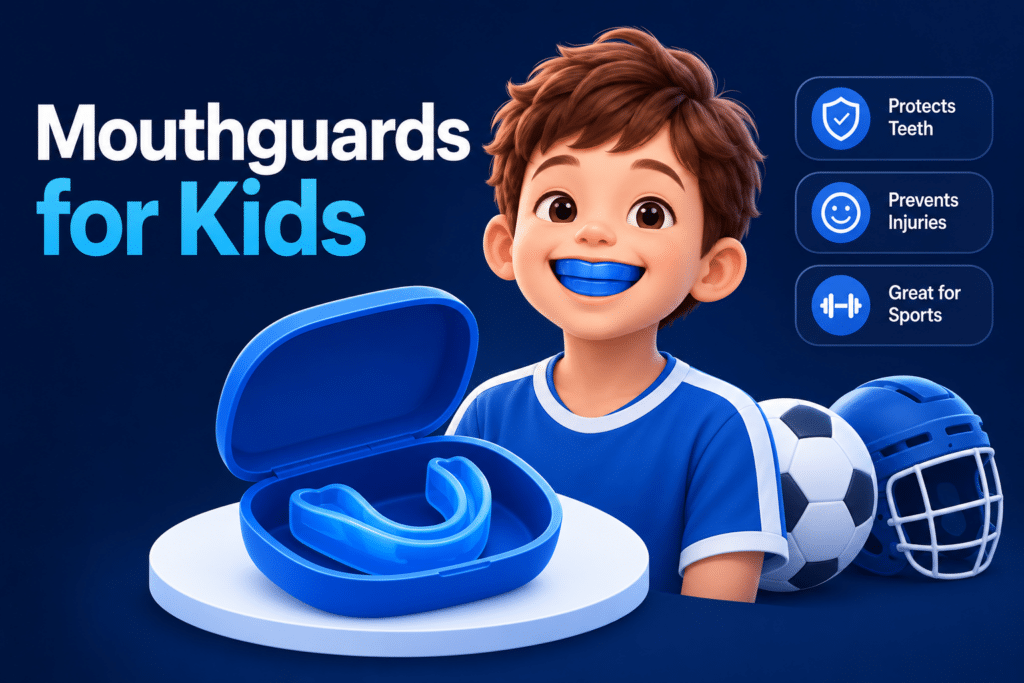
A sports injury can happen in seconds. A fall, collision, ball, bat, stick, or elbow can chip, crack, loosen, or damage a child’s tooth. A properly fitted mouthguard adds a layer of protection during sports and other activities where a child could injure their mouth. For children who play sports regularly, wear braces, or struggle with a standard mouthguard, a custom mouthguards for kids in Corona, NY may be worth discussing with a pediatric dentist.
At Smiley Faces Dental, we help parents understand which type of mouthguard may be right for their child’s age, sport, dental development, and current needs.
Is Your Child’s Sport Putting Their Teeth at Risk?
Yes, possibly. A child does not need to play football or hockey to experience a dental injury. Contact, collisions, falls, fast-moving balls, bats, sticks, and other equipment can all create a risk of impact to the mouth.
Sports and activities where parents may want to consider mouthguard protection include:
| Sport or Activity | Common Risk |
|---|---|
| Football | Player collisions |
| Hockey | Sticks, pucks, and collisions |
| Lacrosse | Sticks and balls |
| Basketball | Falls and accidental contact |
| Soccer | Player collisions and falls |
| Baseball and softball | Balls and bats |
| Martial arts | Direct impact |
| Gymnastics | Falls |
| Skateboarding and biking | Falls and facial impact |
The right choice depends on the sport, the child’s age, how often they play, and their individual dental needs.
A simple parent question: Could my child’s mouth be hit by another player, equipment, a ball, or the ground? If yes, a mouthguard may be worth discussing with a dentist.
What Happens When a Mouthguard Takes a Hit?
When a ball, elbow, stick, or another player hits your child’s mouth, the mouthguard acts as a protective cushion between the impact and the teeth.
It can help protect:
- Teeth from some impacts
- Lips and cheeks from being pressed against the teeth
- Gums and other soft parts of the mouth from some injuries
A mouthguard cannot prevent every dental injury. However, wearing the right one can help reduce the chance of serious damage during sports.
The fit matters just as much as the mouthguard itself. If it slips, feels uncomfortable, or keeps falling out, your child may take it out during the game or stop wearing it altogether.
So, the goal is not simply to buy any mouthguard. The goal is to find one that fits comfortably, stays in place, and is comfortable enough for your child to wear every time they play.
Why Does a Custom Mouthguard Fit Differently?
A custom mouthguard for kids is made specifically for one child’s mouth rather than being produced in a general size.
Because the mouthguard is designed around the child’s current teeth and mouth, it can provide a more personalized fit than a standard stock mouthguard. This can be especially helpful for children who play sports regularly or have specific dental needs.
A well-fitted mouthguard should:
- Stay securely in place
- Feel comfortable
- Allow the child to communicate normally
- Avoid unnecessary irritation
- Fit the child’s current dental needs
What does “custom mouthguard” mean?
A custom mouthguard is a protective mouthpiece made specifically for a child’s teeth and mouth.
Fit means how securely and comfortably the mouthguard stays in place while the child wears it.
A mouthguard that constantly slips out or feels uncomfortable may make it harder for a child to wear it during every practice and game.
Store-Bought or Custom: Which One Makes Sense for Your Child?
There is no single mouthguard that is right for every child. The best option depends on the child’s sport, comfort, dental needs, and how consistently they will wear it.
| Feature | Stock Mouthguard | Boil-and-Bite | Custom Mouthguard |
|---|---|---|---|
| Fit | General size | Molded at home | Made for the child’s mouth |
| Cost | Usually lowest | Moderate | Usually higher |
| Comfort | Can vary | Depends on the fit | More personalized |
| Retention | May move | Usually better than stock | Designed for a secure fit |
| Dentist Involvement | No | No | Yes |
A custom mouthguard may be worth considering if:
- Your child plays sports regularly
- A standard mouthguard keeps slipping
- Your child finds the current mouthguard uncomfortable
- Your child wears braces
- Your child has had a previous dental injury
- Your child’s teeth or dental needs are changing
Our view: The most expensive mouthguard is not automatically the best choice for every child. The right mouthguard fits properly and is one your child will actually wear.
Braces, Growing Teeth, and the Mouthguard Fit Problem
Children’s mouths change as they grow. Teeth move, baby teeth are lost, permanent teeth come in, and orthodontic treatment can change the shape of the mouth.
A mouthguard that fit well before braces may not be the right fit after orthodontic treatment begins. Children with braces may need a mouthguard designed to accommodate their current orthodontic appliances.
If your child wears braces, ask their dentist or orthodontist about the right type of mouthguard. Do not cut or reshape a mouthguard yourself unless a dental professional specifically recommends it.
A mouthguard should be checked whenever your child’s dental needs change.
Five Signs Your Child’s Mouthguard May Need Attention
A mouthguard should stay in place and feel comfortable while your child is playing. If it does not, it may be time to have it checked or replaced.
1. It keeps falling out
If the mouthguard slips out while your child is playing, it may not fit properly. A mouthguard should stay in place without your child constantly adjusting it.
2. Your child has to keep biting down to hold it
A child should not have to constantly bite down just to keep the mouthguard in place. If they do, the mouthguard may not be fitting securely.
3. Your child cannot speak or breathe comfortably
If your child finds it difficult to talk or breathe while wearing the mouthguard, they may avoid wearing it. Comfort matters because a mouthguard only helps when your child actually wears it.
4. It hurts or causes irritation
Check the mouthguard if it causes discomfort around the lips, cheeks, or gums. Sharp edges or areas that rub against the mouth should not be ignored.
5. It is damaged or no longer fits
Chewing, cracks, holes, and normal changes in your child’s teeth can affect how the mouthguard fits. If it looks damaged or feels different, it may be time for a replacement or a professional fit check.
A simple rule for parents: If the mouthguard slips, hurts, feels uncomfortable, or no longer fits well, have it checked.
How Long Can Your Child Keep the Same Mouthguard?
There is no single replacement schedule for every child. A mouthguard should be replaced when it becomes damaged, worn, uncomfortable, or no longer fits properly.
Look for:
- Holes
- Tears
- Cracks
- Chewing damage
- Thin areas
- Changes in fit
Children can also outgrow a mouthguard as their teeth and mouth change. A mouthguard that looks fine on the outside may still no longer fit your child properly.
If your child says the mouthguard feels different or no longer fits, have it checked.
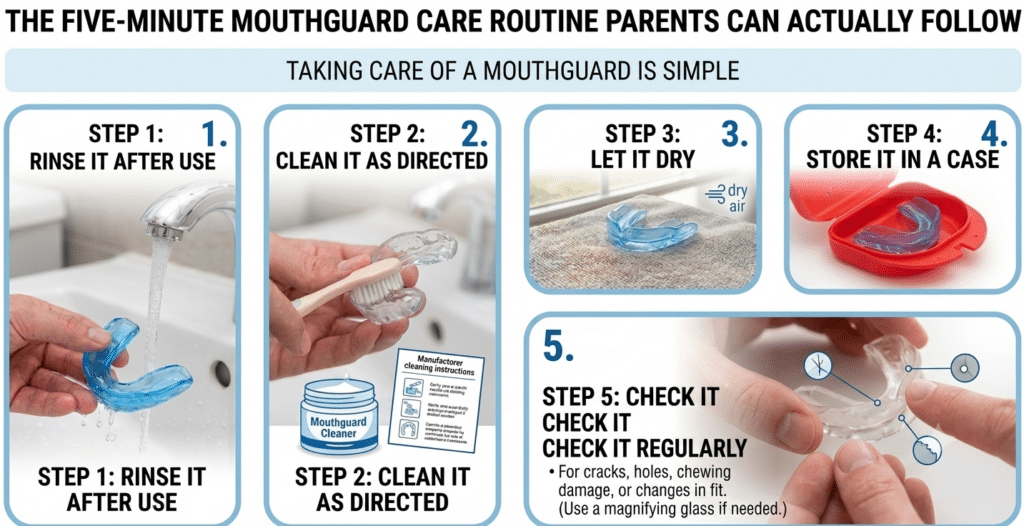
The Five-Minute Mouthguard Care Routine Parents Can Actually Follow
Step 1: Rinse it after use
Rinse the mouthguard with cool or lukewarm water after practice or a game to remove saliva and debris. Avoid hot water because it can change the shape of the mouthguard.
Step 2: Clean it as directed
Clean the mouthguard according to your dentist’s or the manufacturer’s instructions. This helps remove bacteria and keeps it fresh for your child.
Step 3: Let it dry
Allow the mouthguard to air-dry completely before storing it. Storing it while damp can encourage bacteria and unpleasant odors.
Step 4: Store it in a case
Keep the mouthguard in a clean, protective, ventilated case when it is not being used. This helps protect it from damage and keeps it clean.
Step 5: Check it regularly
Look for cracks, holes, chewing marks, or changes in how it fits. If the mouthguard is damaged or no longer fits properly, it may be time to replace it.
Mouthguard Care Checklist
- ☐ Rinse after use
- ☐ Clean regularly
- ☐ Let it dry
- ☐ Store it in a case
- ☐ Check for damage
What Happens If a Tooth Gets Hit During the Game?
Contact a dentist promptly if your child chips, cracks, loosens, or loses a tooth during sports.
Seek prompt dental advice if your child has:
- A knocked-out permanent tooth
- A severely loose tooth
- A broken or badly damaged tooth
- Significant pain
- Heavy bleeding
- Swelling
A dental injury may not always look serious immediately. Having your child’s mouth checked can help determine whether the tooth or surrounding tissues need treatment.
If your child has a sports-related dental injury, learn more about what to do after a child’s dental injury and when to seek emergency pediatric dental care.
Questions Parents Ask About Custom Mouthguards for Kids
1. Is a custom mouthguard worth it for a child?
A custom mouthguard may be worth considering for children who play sports regularly, have difficulty with standard mouthguards, wear braces, or need a more personalized fit. The right choice depends on your child’s individual needs.
2. Does my child need a mouthguard for basketball?
Basketball involves falls, player contact, and accidental impact. A properly fitted mouthguard may help protect a child’s teeth and mouth during play.
3. Can my child wear a mouthguard with braces?
Yes, but the mouthguard should be appropriate for the child’s current orthodontic appliances. Ask your child’s dentist or orthodontist about the right fit.
4. How often should a child replace a mouthguard?
Replace it when it becomes damaged, worn, uncomfortable, or no longer fits properly. Growing children may need a new mouthguard as their teeth and mouth change.
5. How much does a custom mouthguard for kids cost in Corona, NY?
The cost varies based on the dental office, materials, and your child’s individual needs. Contact the dental office for current pricing.
6. Can a mouthguard completely prevent dental injuries?
No. A mouthguard can help reduce the risk and severity of some sports-related dental injuries, but no mouthguard can guarantee complete protection.
Looking for a Custom Mouthguard for Kids in Corona, NY?
If your child plays sports regularly, wears braces, or has trouble keeping a store-bought mouthguard in place, a custom mouthguard may be worth discussing with a pediatric dentist.
At Smiley Faces Dental, we help families in Corona, Jackson Heights, Elmhurst, and nearby Queens communities understand their child’s mouthguard options. We consider your child’s sport, dental development, braces or other orthodontic appliances, comfort, and overall oral health before recommending the right option.
Is your child starting a new sports season? Contact Smiley Faces Dental to discuss whether a custom mouthguard is right for your child’s smile.