
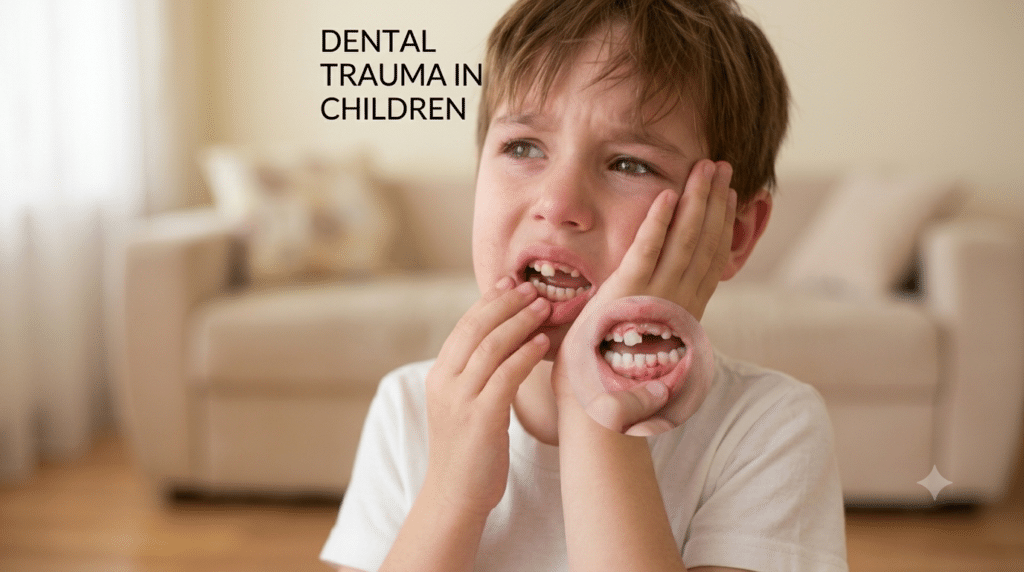
A fall from a bike, a collision during sports, or a playground accident can happen in seconds. While these situations are stressful, knowing what to do before you reach the dentist can help protect your child’s smile and reduce the risk of long-term problems.
Not every dental injury is an emergency, but some need immediate attention. Taking the right steps, handling the tooth correctly, and seeking care can make a real difference in the outcome. If you experience child dental trauma in Corona, NY, this guide explains what to do, what to avoid, and when it’s time to see a pediatric dentist.
The First Five Minutes Can Make All the Difference
The first few minutes after a dental injury are often the most important. Staying calm helps you think clearly and makes it easier to comfort your child.
Here’s what you should do right away:
Stay Calm and Check Your Child
Look for signs of serious injuries first. If your child has difficulty breathing, loses consciousness, or has heavy bleeding that won’t stop, call emergency medical services immediately.
If the injury is limited to the mouth or teeth, you can begin basic first aid while preparing to visit the dentist.
Stop the Bleeding
If there is bleeding, place a clean piece of gauze or a soft cloth over the area and apply gentle pressure for several minutes.
Small cuts inside the mouth often stop bleeding on their own, but deeper cuts may need professional care.
Look for Broken or Missing Teeth
Check whether a tooth is:
- Chipped
- Cracked
- Loose
- Pushed out of place
- Completely knocked out
If you find broken pieces of a tooth, save them and bring them to your dental appointment whenever possible.
Reduce Swelling
Place a cold compress or an ice pack wrapped in a towel on the outside of your child’s cheek for 10 to 15 minutes at a time. This can help reduce swelling and provide comfort.
Call a Pediatric Dentist
Even if the injury seems small, it’s best to have your child’s teeth checked. Some dental injuries may not cause immediate pain but can still affect the tooth over time.
Not Every Tooth Injury Looks Serious, but Some Can’t Wait
Some dental injuries are easy to spot, while others may seem minor at first. Knowing which situations need immediate care can help you act quickly.
| Injury | Contact a Pediatric Dentist | Visit the Emergency Room |
|---|---|---|
| Chipped tooth | ✓ | Only if there is a severe facial injury |
| Loose permanent tooth | ✓ Immediately | Usually not |
| Knocked-out permanent tooth | ✓ Immediately | If combined with serious injuries |
| Tooth pushed out of position | ✓ Immediately | Usually not |
| Cut lip or tongue | ✓ If deep or won’t stop bleeding | ✓ If bleeding is severe |
| Jaw injury or a possible broken jaw | Contact the dentist after ER evaluation | ✓ Immediately |
| Loss of consciousness | After medical evaluation | ✓ Immediately |
A knocked-out permanent tooth, a tooth that has moved out of place, or significant pain should never be ignored. The sooner your child receives dental care, the better the chance of protecting the tooth.
Even a small chip should be evaluated if your child feels pain, sensitivity, or difficulty biting.
Falls, Sports, or Playground Accidents? Here’s What Different Injuries Can Look Like
Children stay active every day, which means dental injuries can happen in many ways. Falls at home, playground accidents, sports, and bicycle crashes are some of the most common causes of child dental trauma.
Understanding the type of injury can help you know what to expect before visiting the dentist. There are several treatment options dentists may use, depending on the injury. Prompt evaluation, x-rays, and pain management are often followed by stabilization, splinting, or restoration.
1. Chipped or Broken Tooth
A chipped tooth may only lose a small piece of enamel, while a broken tooth can expose the inner part of the tooth and cause pain.
Even if your child says it doesn’t hurt, the tooth should still be examined. Small cracks can grow larger over time if left untreated.
2. Loose Tooth After an Injury
A tooth that becomes loose after a fall should always be checked, especially if it is a permanent tooth.
Avoid touching or wiggling the tooth, as this may make the injury worse.
3. Tooth Moved Out of Position
Sometimes a tooth is pushed inward, outward, or sideways instead of falling out completely.
This type of injury requires dental care because the tooth may be able to be repositioned.
4. Knocked-Out Tooth
A permanent tooth that comes out completely is one of the most urgent dental emergencies.
Quick action gives the best chance of saving the tooth.
5. Injuries to the Lips, Gums, or Tongue
Cuts inside the mouth often happen along with tooth injuries.
Most small cuts heal well, but deep cuts or bleeding that doesn’t stop should be evaluated.
A Tooth Came Out Completely: Now What?
Seeing a permanent tooth on the ground can be frightening, but acting quickly can improve the chances of saving it.
Pick Up the Tooth Carefully
Hold the tooth by the top part, also called the crown.
Avoid touching the root because it contains delicate tissues that help the tooth heal after it is placed back in the mouth.
If the Tooth Is Dirty
If dirt is visible, gently rinse it with clean water for a few seconds.
Do not scrub the tooth, use soap, or dry it with a towel.
Keep the Tooth Moist
If possible, place the tooth in a container of cold milk or saline solution.
If neither is available, keep it moist and head to the dentist immediately.
Don’t Wait
Time matters.
A knocked-out permanent tooth has the best chance of being saved when your child receives dental care as quickly as possible.
Remember: Baby Teeth Are Different
If a baby tooth is knocked out, do not try to place it back into the socket.
Doing so may damage the developing permanent tooth underneath.
Why Baby Teeth and Permanent Teeth Should Never Be Handled the Same Way
Many parents assume every knocked-out tooth should be treated the same way. That’s not the case.
| Baby Tooth | Permanent Tooth |
|---|---|
| Do not place it back into the socket. | Handle the tooth carefully and keep it moist. |
| Schedule an urgent dental visit. | Seek immediate dental care. |
| The dentist will check for damage to the developing permanent tooth. | Quick treatment may help save the tooth. |
Even though baby teeth eventually fall out naturally, they help children chew comfortably, speak clearly, and guide permanent teeth into the correct position. That’s why every dental injury deserves professional evaluation.
If you’re unsure whether the injured tooth is a baby tooth or a permanent tooth, avoid handling it unnecessarily and contact your pediatric dentist for guidance.
Before You Leave for the Dentist, Avoid These Common Mistakes
Parents often want to help as quickly as possible, but a few common mistakes can make treatment more difficult.
Avoid these actions after a dental injury:
- Don’t touch the root of a knocked-out permanent tooth.
- Don’t scrub or clean the tooth with soap or chemicals.
- Don’t throw away broken tooth pieces.
- Don’t ignore swelling or ongoing bleeding.
- Don’t let your child bite into hard foods after the injury.
- Don’t wait to see if the pain goes away on its own.
Instead, keep your child comfortable, follow the recommended first-aid steps, and arrange a dental visit as soon as possible.
Many dental injuries look minor at first but can become more serious without timely care. Examination helps identify hidden damage and gives your child the best chance for a healthy recovery.
FAQ
1. What is child dental trauma?
Child dental trauma is any injury to a child’s teeth, gums, lips, or mouth caused by a fall, sports injury, playground accident, or other impact. Common injuries include chipped, loose, broken, or knocked-out teeth.
2. What should I do immediately after my child injures a tooth?
Stay calm, stop any bleeding with clean gauze, check for broken or missing teeth, apply a cold compress to reduce swelling, and contact a pediatric dentist as soon as possible. If a permanent tooth is knocked out, keep it moist in milk or saline and seek immediate dental care.
3. How soon should my child see a dentist after dental trauma?
Your child should see a pediatric dentist as soon as possible after a dental injury. Quick treatment helps identify hidden damage and may improve the chances of saving an injured permanent tooth.
4. Why did my child’s tooth turn gray after a fall?
A tooth may turn gray if its blood supply was affected during the injury. This doesn’t always mean the tooth is lost, but it should be evaluated by a pediatric dentist to determine whether treatment is needed.
5. Should I visit the emergency room or a pediatric dentist?
Most dental injuries should be treated by a pediatric dentist. However, go to the emergency room immediately if your child has heavy bleeding, difficulty breathing, a suspected broken jaw, or loses consciousness.
Conclusion
A dental injury can happen when you least expect it, but knowing what to do before you reach the dentist can help protect your child’s smile. Whether it’s a chipped tooth, a loose tooth, or a knocked-out permanent tooth, acting quickly and following the right steps can improve the outcome.
If your child experiences child dental trauma in Corona, NY, don’t wait for pain or swelling to get worse. Evaluation by a pediatric dentist can identify hidden damage, relieve discomfort, and support healthy healing. Early care helps protect both baby teeth and permanent teeth, giving your child the best chance for a healthy smile as they grow.