

When a child loses a baby tooth earlier than expected, many parents assume it’s simply part of growing up. However, losing a baby tooth too soon can affect how the permanent teeth come in later. Without enough space, nearby teeth may shift into the empty spot, making it harder for the permanent tooth to erupt properly. A teeth space maintainer in Corona, NY, is a small dental appliance designed to keep that space open until the permanent tooth is ready to come in. It helps support healthy tooth development and may reduce the risk of future alignment problems.
Not every child who loses a baby tooth needs a space maintainer. The best way to know is through an evaluation with a pediatric dentist, who can examine your child’s teeth, review dental X-rays, and recommend the most appropriate next step.
What Is a Teeth Space Maintainer?
A teeth space maintainer is a custom-made dental appliance that holds open the space left by a baby tooth that is lost too early. It prevents nearby teeth from shifting into the gap while waiting for the permanent tooth to erupt.
Baby teeth do more than help children chew and speak. They also act as natural guides for permanent teeth. When one is lost too soon, the surrounding teeth can begin moving into the space.
A space maintainer keeps the correct amount of room available until the permanent tooth is ready to grow in naturally.
Understanding a Few Simple Terms
Baby tooth
A baby’s first set of teeth, also called primary teeth, that eventually fall out as permanent teeth develop.
Permanent tooth
The adult tooth that replaces a baby tooth and is meant to last throughout life.
Space maintainer
A custom dental appliance that preserves the space left by a prematurely lost baby tooth. Although space maintainers are small, they play an important role in helping permanent teeth erupt in the proper position.
Types of Teeth Space Maintainers

Different types of space maintainers are designed for different situations. The pediatric dentist recommends the most appropriate option based on which tooth was lost, your child’s age, and how the permanent teeth are developing.
Band and Loop
This is one of the most common types. A metal band is attached to a nearby tooth, and a small loop extends into the space to keep it open.
Best for: A single missing baby tooth.
Crown and Loop
If the supporting tooth needs a dental crown, a loop can be attached to the crown to preserve the space.
Best for: A child who also requires a dental crown.
Distal Shoe
This type is used when a baby molar is lost before the first permanent molar has erupted. It helps guide the permanent molar into the correct position.
Best for: Certain early molar losses where careful monitoring is needed.
Lingual Holding Arch
When several teeth are missing in the lower jaw, this appliance connects the back teeth with a wire running behind the front teeth.
Best for: Multiple missing lower baby teeth.
Removable Space Maintainer
Some older children may be candidates for a removable appliance. Success depends on wearing it as instructed.
Best for: Selected cases where the child can reliably remove and replace the appliance.
| Type | Best For | Fixed or Removable |
|---|---|---|
| Band and Loop | One missing baby tooth | Fixed |
| Crown and Loop | Tooth needing a crown | Fixed |
| Distal Shoe | Early loss of baby molar | Fixed |
| Lingual Holding Arch | Multiple lower teeth | Fixed |
| Removable Space Maintainer | Selected older children | Removable |
Why Does My Child Need a Tooth Space Maintainer?
A pediatric dentist may recommend a space maintainer when a baby tooth is lost much earlier than expected. The goal is to preserve enough room for the permanent tooth to grow into its proper position.
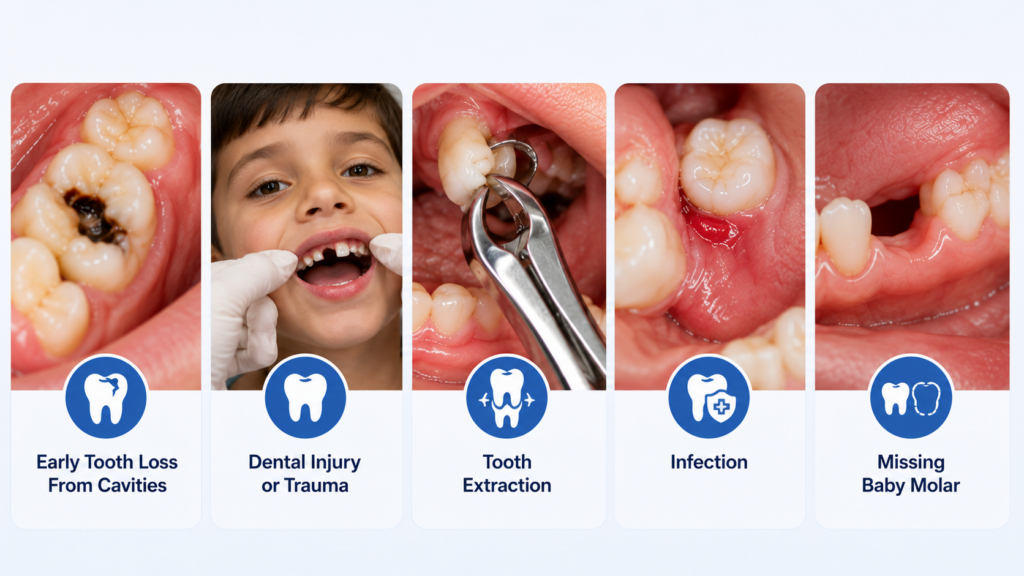
Some of the most common reasons include:
Early Tooth Loss From Cavities
Severe tooth decay sometimes makes it impossible to save a baby tooth. If it must be removed early, the remaining teeth can begin drifting into the space.
Dental Injury or Trauma
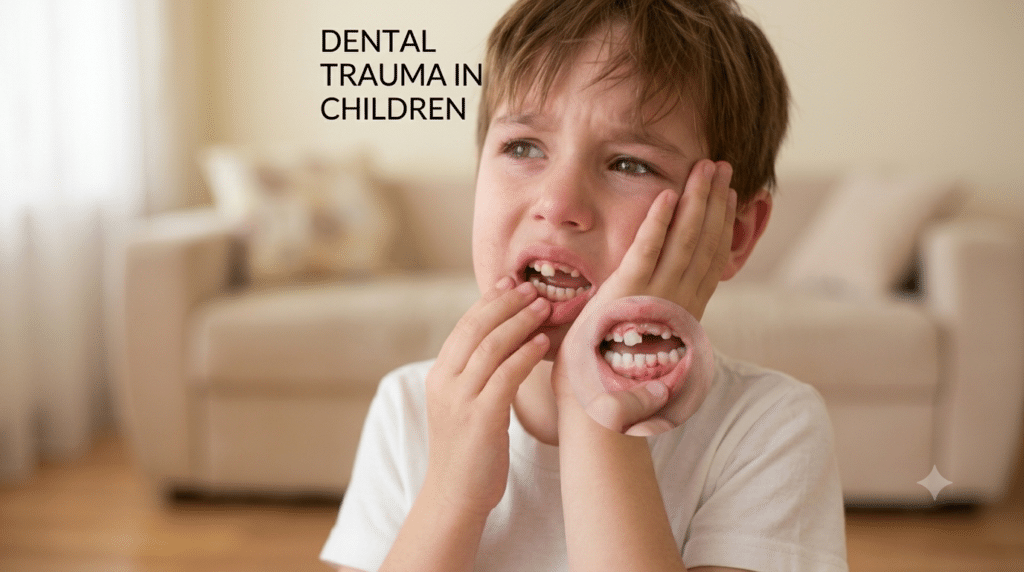
Falls, sports injuries, and accidents can knock out or severely damage a baby tooth before it is naturally ready to come out.
Tooth Extraction
Some baby teeth require extraction because of extensive decay, infection, or other dental concerns. A space maintainer may be recommended afterward to preserve proper spacing.
Infection
A serious infection around a baby tooth can damage nearby tissues. If the tooth cannot be treated successfully, removing it may be the healthiest option.
Missing Baby Molar
Baby molars are especially important because they maintain space for larger permanent teeth. Losing one too early increases the chance of future spacing problems.
Expert Insight
Every child develops differently. A pediatric dentist considers your child’s age, dental growth, and the expected timing of permanent tooth eruption before deciding whether a space maintainer is necessary. Preserving space today can support healthier tooth eruption in the future.
What Happens If My Child Doesn’t Get a Space Maintainer?

Not every child needs a space maintainer. However, if one is recommended and the space is left unprotected, nearby teeth may gradually move into the gap.
This can create several challenges as permanent teeth begin to erupt.
Teeth May Shift
Teeth naturally move over time. A space can allow neighboring teeth to drift, reducing the room available for the permanent tooth.
Crowding Can Develop
When there isn’t enough room, permanent teeth may erupt in crowded or overlapping positions.
Permanent Teeth May Become Blocked
Sometimes a permanent tooth cannot erupt normally because another tooth has moved into its path.
Bite Problems
Improper tooth positioning can affect how the upper and lower teeth fit together when biting or chewing.
Greater Chance of Orthodontic Treatment
Loss of space may increase the likelihood that orthodontic treatment becomes more complex later. While a space maintainer cannot prevent every orthodontic issue, preserving space may reduce certain risks.
| Without a Space Maintainer | With a Space Maintainer |
|---|---|
| Teeth may shift | Space is preserved |
| Crowding may develop | Supports proper spacing |
| Bite changes are more likely | Helps guide normal eruption |
| Higher chance of complex orthodontic treatment | May reduce unnecessary spacing problems |
Should Your Child Get a Space Maintainer After Losing a Baby Tooth?
No.
Many parents are surprised to learn that a space maintainer is not needed every time a baby tooth is lost.
Several important factors help determine the right treatment.
Your Child’s Age
A child’s age plays an important role in deciding whether a space maintainer is needed. Younger children usually have more years before their permanent teeth erupt, which increases the risk of nearby teeth shifting into the space. In these cases, maintaining the space can help support proper tooth alignment.
Which Tooth Was Lost
Not all baby teeth have the same impact on future dental development. Some teeth, especially baby molars, help guide permanent teeth into the correct position. When these teeth are lost too early, there is a greater chance that surrounding teeth will move and reduce the space needed for the adult tooth.
Timing of Permanent Tooth Eruption
The closer the permanent tooth is to erupting, the less likely a space maintainer will be needed. If the adult tooth is expected to appear soon, the dentist may simply monitor the area rather than recommend treatment. The expected eruption timeline helps determine the best approach.
Available Space
Your child’s dentist will check whether enough room remains for the permanent tooth to erupt properly. If the surrounding teeth have not shifted and adequate space is still available, a space maintainer may not be necessary. Regular monitoring can help ensure the space remains open.
Dental X-Rays
Dental X-rays provide a clear view of the developing permanent tooth beneath the gums. They help the dentist evaluate tooth position, eruption progress, and the amount of available space. This information is essential for determining whether a space maintainer will benefit your child’s long-term oral health.
How Is a Teeth Space Maintainer Placed and Cared For?
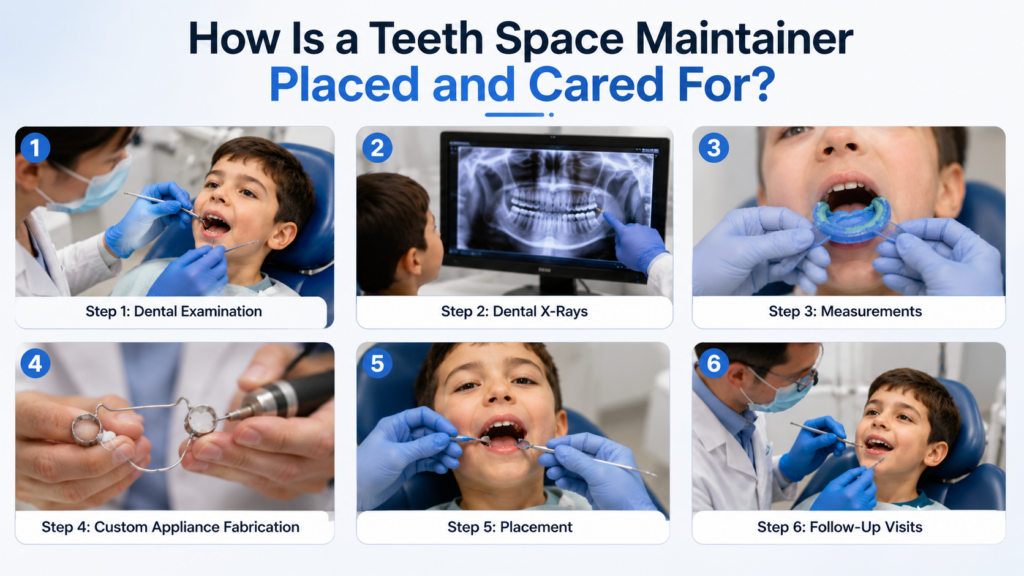
Getting a teeth space maintainer is usually a straightforward process. The appliance is custom-made to fit your child’s mouth and is designed to stay comfortable while preserving the space for the permanent tooth.
Step 1: Dental Examination
The pediatric dentist examines your child’s teeth, gums, and bite to determine whether a space maintainer is needed.
Step 2: Dental X-Rays
X-rays help show the position of the developing permanent tooth and whether there is enough room for it to erupt properly.
Step 3: Measurements
If a space maintainer is recommended, impressions or digital scans are taken to create a custom appliance that fits your child’s mouth.
Step 4: Custom Appliance Fabrication
The appliance is made specifically for your child’s teeth. This helps ensure a comfortable and secure fit.
Step 5: Placement
During the placement appointment, the pediatric dentist checks the fit and securely places the appliance. Most children adjust to it within a few days.
Step 6: Follow-Up Visits
Regular dental checkups allow the dentist to monitor the appliance, ensure it remains in place, and determine when it should be removed after the permanent tooth begins to erupt.
Encourage your child to:
- Brush carefully around the appliance twice a day.
- Floss as instructed by the dentist.
- Keep regular dental checkups.
- Tell you if the appliance feels loose or uncomfortable.
Foods to Avoid
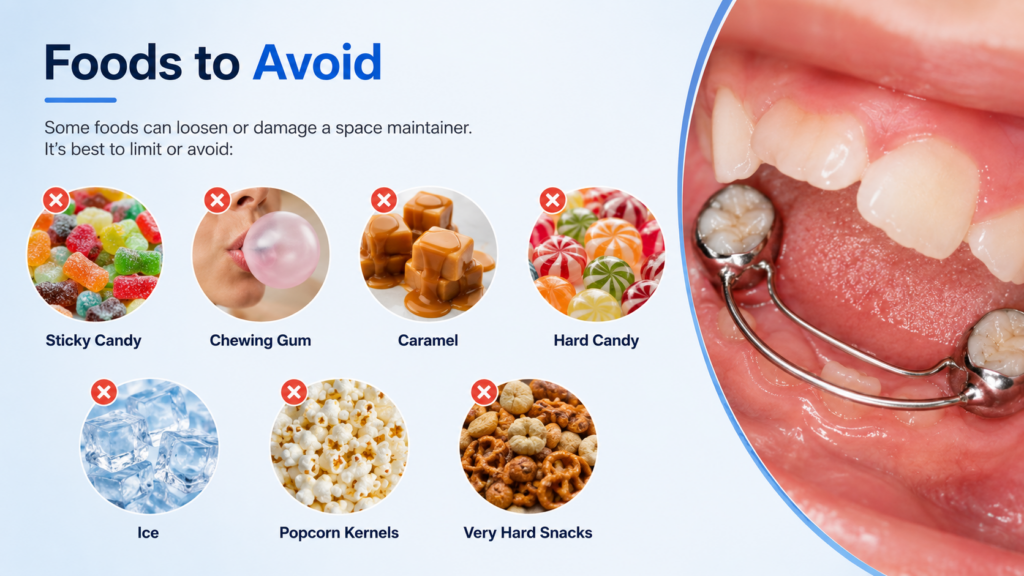
Some foods can loosen or damage a space maintainer.
It’s best to limit or avoid:
- Sticky candy
- Chewing gum
- Caramel
- Hard candy
- Ice
- Popcorn kernels
- Very hard snacks
How Long Will My Child Wear It?
Every child is different. Some children wear a space maintainer for several months, while others may need it for a few years. The length of treatment depends on when the permanent tooth is expected to erupt.
Warning Signs Parents Should Watch For
Contact your pediatric dentist if you notice:
- The appliance becomes loose.
- It breaks or bends.
- Your child complains of ongoing pain.
- The gums become swollen or irritated.
- Food frequently gets trapped around the appliance.
Can a Teeth Space Maintainer Help Prevent Future Orthodontic Problems?
A teeth space maintainer helps preserve the space needed for permanent teeth to erupt naturally. By preventing nearby teeth from shifting, it supports healthy dental development.
However, it’s important to have realistic expectations.
A space maintainer may reduce certain spacing problems, but it does not guarantee that a child will never need braces or other Pediatric treatment.
Every child’s dental growth is unique, and factors such as genetics, jaw development, and tooth size also affect future alignment.
Benefits
- Helps maintain space for permanent teeth.
- Reduces unnecessary tooth movement.
- Supports normal tooth eruption.
- May decrease the complexity of future orthodontic treatment.
- Helps preserve natural bite development.
Limitations
- Does not prevent every orthodontic problem.
- Cannot correct existing crowding.
- Requires regular monitoring.
- Must be kept clean and in good condition.
- Some children may still need braces later.
When Should Parents Visit a Pediatric Dentist?
If your child loses a baby tooth earlier than expected, it’s a good idea to schedule a dental evaluation as soon as possible. Early assessment helps determine whether the space should be preserved before nearby teeth begin to shift.
You should visit a pediatric dentist if your child:
- Loss of a baby tooth because of severe decay.
- Has a baby tooth removed.
- Injures a tooth during a fall or sports activity.
- Experience swelling or signs of infection.
- Has persistent tooth pain.
- Has a loose or broken space maintainer.
Early evaluation allows your emergency pediatric dentist to determine whether treatment is needed and helps support healthy dental development as your child grows.
Frequently Asked Questions About Teeth Space Maintainer
1. What is a teeth space maintainer?
A teeth space maintainer is a custom-made dental appliance that keeps the space open after a baby tooth is lost too early. This allows the permanent tooth to erupt with enough room.
2. Does every child need one?
No. Some children do not require a space maintainer. A pediatric dentist evaluates your child’s age, the missing tooth, available space, and dental X-rays before making a recommendation.
3. Is getting a space maintainer painful?
No. Placing a space maintainer is generally comfortable and does not involve surgery. Your child may notice it for a short time while adjusting, but most children adapt quickly.
4. How long does a child wear a space maintainer?
It depends on when the permanent tooth is ready to erupt. Some children wear one for several months, while others may need it for a longer period.
5. Can my child eat normally with it?
Yes. Most children can continue eating their usual meals. However, sticky, chewy, and very hard foods should be avoided because they can damage the appliance.
6. What happens if the space maintainer becomes loose?
Contact your pediatric dentist as soon as possible. A loose appliance may no longer preserve the space effectively and should be checked promptly.
7. Will my child still need braces later?
Possibly. A space maintainer helps preserve space but does not guarantee that braces won’t be needed. Future orthodontic treatment depends on your child’s overall dental development.
Conclusion
Losing a baby tooth early doesn’t always mean your child will need a space maintainer. However, waiting too long to have the area evaluated can allow nearby teeth to shift, making it more difficult for permanent teeth to erupt properly.
A timely examination helps determine whether preserving the space is the right choice based on your child’s age, dental development, and the position of the permanent tooth. When recommended, a custom teeth space maintainer can support healthy tooth eruption and reduce the risk of future spacing problems.
If your child has lost a baby tooth prematurely or recently had one removed, scheduling an evaluation with a pediatric dentist in Corona, NY, can help you understand the best next steps for protecting their growing smile.