
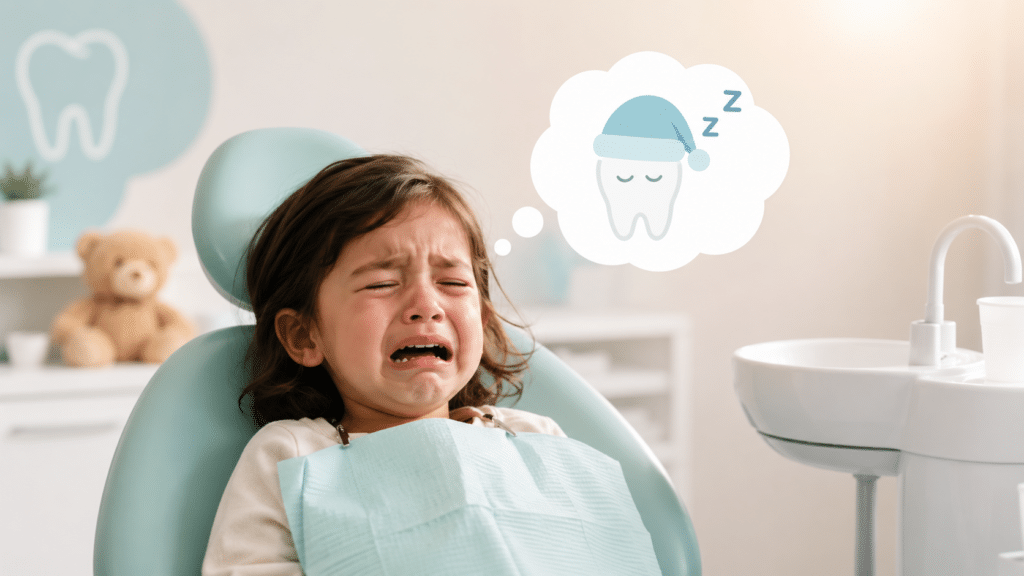
Seeing your child crying after dental sedation can be upsetting. Many parents expect their child to feel calm once the procedure is over, so ongoing tears can be concerning.
The good news is that in many cases, a child crying after dental sedation is a common part of recovery. Some children wake up feeling confused, tired, emotional, or uncomfortable. These reactions usually improve as the sedation wears off.
However, there are situations when crying may signal a problem that needs attention. Knowing the difference can help you feel more confident about your child’s recovery.
Is Child Crying After Dental Sedation Normal?
Yes, a child crying after dental sedation is normal for many children.
Dental sedation can affect how a child feels and behaves for several hours after treatment. Some children wake up feeling confused, clingy, irritable, or emotional. Others may cry because they are tired, hungry, or unsure of what is happening around them.
Crying improves as the child becomes more alert and comfortable. If the crying becomes severe, continues for an unusually long time, or occurs along with breathing problems, severe pain, or repeated vomiting, contact your dentist right away.
What Your Child’s Tears May Be Telling You
Waking Up Before Feeling Fully Alert
Many children wake up gradually after sedation. During this time, they may not fully understand where they are or what has happened. This can make them feel scared or frustrated, which may lead to crying.
This reaction is usually temporary and often improves as the child becomes more awake.
Temporary Confusion During Recovery
Sedation dentistry can make children feel different than usual while it leaves their system. They may seem emotional, clingy, or upset even when nothing is wrong.
Some children cry simply because they feel confused. This crying often decreases within a few hours.
Feeling Tired, Hungry, or Overstimulated
A dental appointment can be a long experience for a child. After treatment, they may feel tired, thirsty, hungry, or overwhelmed.
Even small discomforts can cause extra tears during recovery because children are not feeling completely like themselves yet.
Not Every Cry Means Pain
A child crying after dental sedation does not always mean they are in pain. Many children feel tired, confused, or emotional as the sedation wears off, and crying is often how they express those feelings.
Younger children may cry more because they do not fully understand why they feel different after treatment. In some cases, anxiety from the dental visit can also show up during recovery, leading to clinginess or a greater need for comfort. These reactions are usually temporary and improve as your child becomes more alert and comfortable.
The First Few Hours After Sedation: What Parents Can Expect
During the Ride Home
Many children are sleepy during the trip home. Some may cry on and off, while others may fall asleep.
This is usually part of the normal recovery process.
The First Hour After Arrival Home
Your child may want extra attention and comfort. They may be quiet, emotional, or less interested in normal activities.
Providing a calm environment often helps them settle more quickly.
What Recovery Often Looks Like Before Bedtime
As the day goes on, many children become more alert and begin acting more like themselves.
Some may still be tired or emotional, but gradual improvement is a positive sign that recovery is moving in the right direction.
Signs Your Child Is Recovering Normally
Most children recover without problems. Common signs of normal recovery include:
- Mild crying that improves over time
- Wanting extra comfort from parents
- Feeling sleepy
- Low energy levels
- Temporary mood changes
- Reduced appetite
- Wanting to rest more than usual
These reactions are usually short-term and improve as the sedation wears off.
Recovery Reactions That Shouldn’t Be Ignored
While crying is often normal, certain symptoms deserve immediate attention.
Contact your dentist if your child has:
- Severe pain that does not improve
- Trouble breathing
- Repeated vomiting
- Extreme difficulty waking up
- Crying becomes worse instead of better
- Unusual behavior that continues for many hours
If you are ever unsure whether a reaction is normal, contacting a Pediatric Dentist in Corona, NY, is the safest choice.
Comfort Strategies That Can Help Calm Your Child
Create a Quiet Recovery Space
After dental sedation, children may feel sensitive to noise, lights, and activity. A calm and familiar environment can help them feel more comfortable while they recover. Let your child rest in a quiet room with minimal distractions.
Offer Small Sips of Water
Keeping your child hydrated can help them feel better during recovery. Start with small sips of water and gradually offer more fluids if they are comfortable and your dentist has approved it.
Encourage Rest Without Pressure
Many children feel tired after sedation. Allow your child to rest at their own pace, whether that means sleeping, relaxing on the couch, or enjoying a quiet activity.
Use Dentist-Recommended Pain Relief
Some children may experience mild discomfort after treatment. Follow your dentist’s instructions for pain relief and avoid giving any medication that has not been recommended.
Stay Close and Reassuring
Children often need extra comfort after dental sedation. Staying nearby, speaking calmly, and offering reassurance can help them feel safe while they recover. If you have questions about recovery, don’t hesitate to contact our office.
Quick Tip
Most children feel better with rest, fluids, and reassurance. If crying becomes severe, worsens over time, or is accompanied by concerning symptoms, contact your dentist.
FAQ: Child Crying After Dental Sedation
1. Is it normal for a child to cry after anesthesia?
Yes. Crying, confusion, and emotional behavior are common during recovery and usually resolve within 24 hours.
2. Why is my child hysterical after dental sedation?
Children may wake up confused or disoriented as medications wear off. This temporary reaction is common and usually improves with time.
3. How long does emotional behavior last after oral sedation?
Most children return to normal within 2 to 6 hours, although some remain sleepy or clingy until bedtime.
4. Can sedation cause mood swings?
Yes. Mood changes, irritability, and crying are normal, temporary side effects of sedation medications.
5. Should I let my child sleep after dental sedation?
Yes. Rest helps recovery. However, your child should wake easily and respond normally when aroused.
6. Can toddlers cry for hours after sedation?
Yes. Some toddlers remain emotional for several hours, especially after oral sedation or general anesthesia. Most improve gradually throughout the day.
Here’s What We See at Smiley Faces Dental in Corona, NY
Parents often worry that their child is experiencing pain or that something went wrong when crying continues after the appointment. In reality, this is one of the most common post-treatment concerns we hear.
Children recovering from sedation in Corona, Junction Boulevard, 11368, and throughout Queens often experience temporary emotional changes that improve with rest and reassurance.
Most children wake up from a nap later that day and are back to laughing, playing, and acting like themselves.
If your child recently had a sedation appointment and you’re unsure whether what you’re seeing is normal, our team is always happy to answer questions and help you determine whether your child’s recovery is progressing as expected.