

Your baby’s first tooth is a bigger milestone than it seems, and it’s usually the moment most parents start wondering about that first dentist visit. The truth is, waiting too long can let small dental issues develop quietly without you even noticing. Your baby should have their first dental visit by age 1, or within 6 months of their first tooth coming in. An early visit isn’t about treatment; it’s about prevention, guidance, and making sure everything is on the right track from the start.
In this guide, you’ll learn the right timing for your baby’s first dental checkup, what actually happens during that visit, the subtle signs you shouldn’t ignore, and how to make the whole experience calm and easy for both you and your little one.
So, What Is the Right Age for a Baby’s First Dental Visit?
The recommended age is before your baby’s first birthday. That might sound early, especially if your baby only has one or two teeth. But here’s why it matters. Teeth usually start appearing around 6 months. And from that moment, they’re exposed to sugars, bacteria, and daily wear. That means tooth decay can begin much earlier than most parents expect.
Early childhood cavities affect nearly 20% of children by age 5, according to global health data. And many of those cases actually begin during infancy. So the goal isn’t just to “check teeth.” It’s to start prevention early, before anything goes wrong.
Why Do Dentists Recommend Seeing a Baby So Early?
This is where most parents get confused. You might think, “What can a dentist even do for a baby?” Honestly, it’s less about treatment and more about guidance. The biggest benefit of an early visit is preventing problems before they start.
During that first appointment, your dentist looks at how the teeth are developing, checks for early signs of decay, and evaluates gum health. But just as important, they help you understand how to care for your baby’s teeth properly.
There are three main reasons dentists push for early visits:
- First, early detection. Minor issues are simpler and less expensive to resolve.
- Second, parent education. You learn to distinguish between what is normal and what is not.
- Third, comfort building. Your baby gets used to the dental environment early.
Here’s what we see all the time: parents wait until there’s a visible problem. By then, the solution is usually more complicated than it needed to be.
What Happens During a Baby’s First Dental Visit?
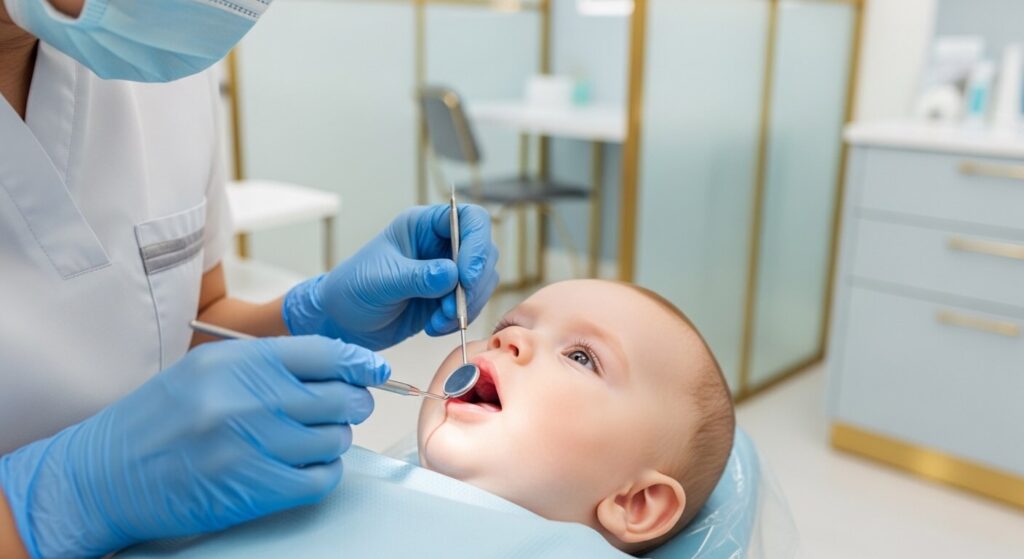
Let’s clear this up, because this is where a lot of anxiety comes from. The first visit is quick, gentle, and very low-stress. It usually lasts about 20 to 30 minutes. Your baby will often sit on your lap while the dentist examines their mouth. No scary setup. No pressure.
The dentist will check the teeth, gums, jaw, and bite. They’re looking for early signs of decay, proper tooth eruption, and any developmental concerns.
If needed, they may do a light cleaning. But honestly, the real value is in the conversation.
You’ll get clear answers to things like:
- Are feeding habits affecting dental health?
- Is teething happening normally?
- Should you be brushing already?
At clinics like Smiley Faces Dental, the focus is on making both parent and child feel relaxed. It’s more like a guided checkup than a medical procedure.
If you want a deeper look into how children’s dental care evolves as they grow, this pediatric dentistry guide walks you through every stage in a simple, practical way.
What Are the Early Signs That Your Baby Needs a Dentist Sooner?
Sometimes, waiting until age one isn’t the best idea. If you notice something unusual, it’s better to go earlier. Because early signs are often subtle. The most common warning signs include white or chalky spots on teeth, which can be the first stage of decay. You might also see brown spots, swollen gums, or bleeding while cleaning.
Another sign is delayed tooth eruption. Most babies typically begin to get their first teeth at around six months of age. If nothing appears by 12 months, it’s worth checking. Here’s a real-life moment we hear often: a parent notices a small white line on a tooth and assumes it’s normal. But during a checkup, it turns out to be early enamel damage that may benefit from preventive options like Silver Diamine Fluoride (SDF).
The good news? When caught early, it’s usually easy to manage.
Getting Ready for Baby’s First Dental Visit: What Parents Should Know
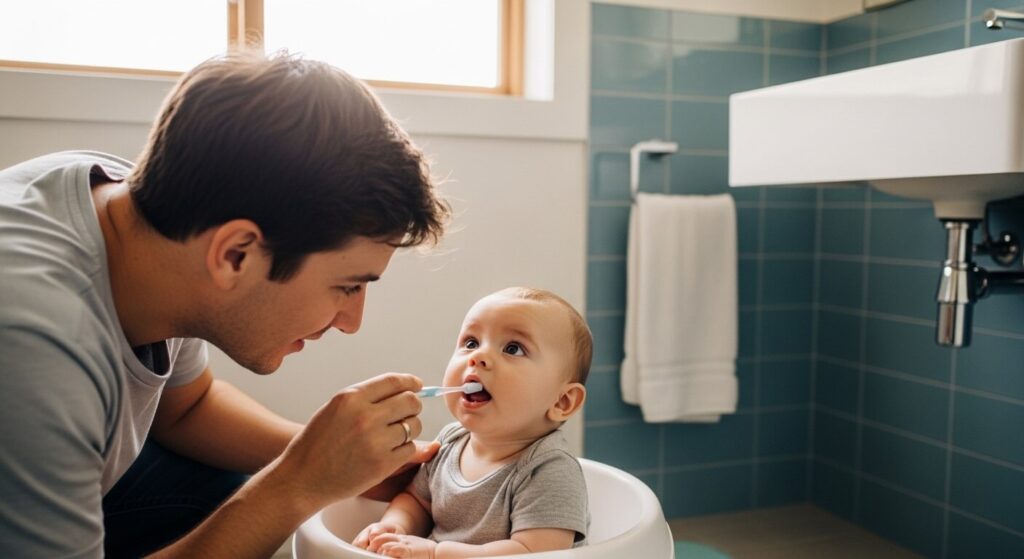
Preparation doesn’t mean explaining the appointment; your baby won’t understand that yet. But you can make the experience smoother. Begin by selecting the most appropriate time of day. A well-rested, fed, and calm baby makes everything easier. You can also gently introduce oral care at home. Lift your baby’s lip, touch their gums, and use a soft toothbrush daily. This helps them get used to the sensation.
And here’s something easy to overlook. Your energy matters. If you’re calm, your baby will feel that. If you’re anxious, they’ll pick up on it too. Honestly, most babies do just fine. It’s usually the parents who worry more.
What Happens If You Delay Your Baby’s First Dental Visit?
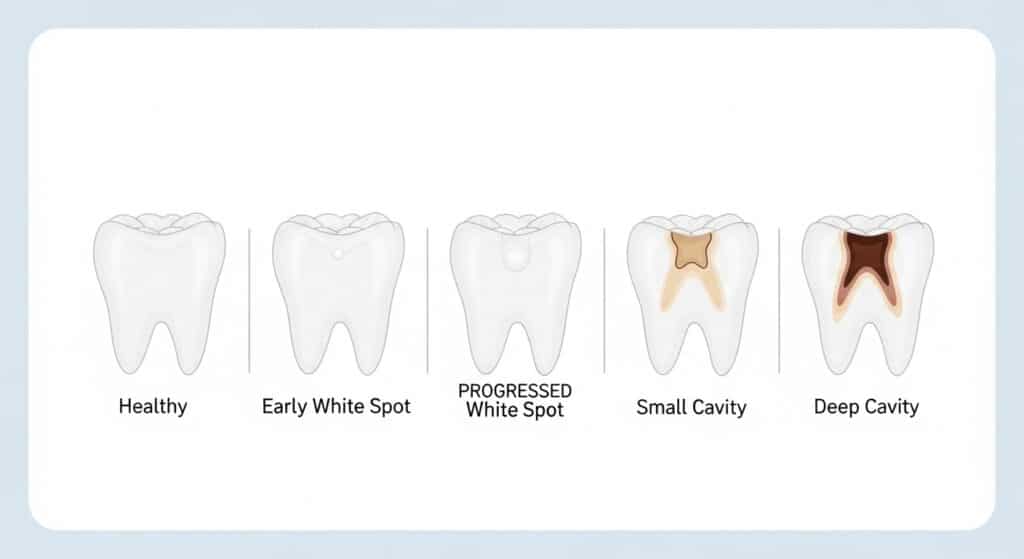
Delaying might not seem like a big deal at first. But it quietly increases the risk of problems. Early cavities often don’t cause pain right away. So everything seems fine… until the damage gets deeper. By the time symptoms show up, treatment may involve fillings or more complex care, which could have been avoided with early visits.
Here’s a simple comparison:
| Age of First Visit | Risk Level | What Usually Happens |
|---|---|---|
| Before 1 Year | Low | Prevention and guidance |
| 1 – 2 Years | Moderate | Early signs may appear |
| After 2 Years | Higher | Cavities are more likely, and treatment is needed |
This is why dentists recommend early checkups. It’s not about doing more work, it’s about avoiding it.
How Often Should Your Baby Visit the Dentist After the First Appointment?
After the first visit, most babies should see a dentist every 6 months. But this can vary. If your child has a higher risk of cavities, maybe due to frequent snacking, night feeding, or family history, your dentist might recommend more frequent visits.
These follow-ups stay simple. Quick exams, gentle cleanings, and updated advice as your child grows. And here’s a long-term benefit people don’t talk about enough: kids who start early usually have less dental fear later in life. They grow up thinking, “This is normal.” Not “This is scary.”
What Daily Habits Protect Your Baby’s Teeth From the Start?
This is where small actions make a big difference. Oral care should begin before the first tooth even appears. You can clean your baby’s gums with a soft cloth after feeding. Once the first tooth comes in, switch to a baby toothbrush and use a tiny smear of fluoride toothpaste, about the size of a grain of rice.
Also, avoid putting your baby to bed with a bottle of milk or juice. This can lead to something called baby bottle tooth decay, where sugars sit on the teeth overnight. And yes, even natural sugars matter. Milk and formula still affect teeth. It’s not about being perfect. It’s about being consistent.
Things Parents Always Get Wrong About Baby Dental Care
Let’s clear up a few common misconceptions.
First, “baby teeth don’t matter.” They do. They help your child eat, speak, and guide adult teeth into place.
Second, “we’ll start brushing later.” Brushing should start as soon as the first tooth appears.
Third, “healthy food means no cavities.” Even natural sugars can contribute to decay if oral hygiene isn’t consistent.
If you’ve ever been unsure about this stuff, you’re not alone. Most parents are figuring it out as they go.
FAQ: Baby First Dental Visit
1. Baby’s First Dental Visit: What’s the Right Age?
To ensure the best dental health for your child, schedule their first visit by age one or no later than six months after the appearance of their first tooth, whichever comes first.
2. What should I do if my baby hasn’t gotten any teeth yet?
You should still visit a dentist. They’ll check gum health and development.
3. Is the first dental visit painful?
No. It’s gentle, quick, and designed to keep babies comfortable.
4. How do I clean my baby’s mouth daily?
Use a soft cloth before teeth appear, then a baby toothbrush with a small amount of fluoride toothpaste.
5. Can babies really get cavities?
Yes. Cavities can start early, even during infancy, especially with frequent feeding.
Final Thoughts: Start Early, Keep It Simple
Here’s the bottom line: your baby’s first dental visit should happen earlier than most people think. And honestly, it’s not a big, scary milestone. It’s a simple, preventive step. Starting early helps you avoid problems, build healthy habits, and make dental care feel normal for your child.
If you’ve been waiting for the “right time,” this is it.
👉 Book your child’s first checkup today and give them a healthy start that lasts for years.