
A dental crown for a 5-year-old is one of the most common restorative treatments in pediatric dentistry. By age 5, nearly 1 in 4 children have cavities. Additionally, 42% of kids between the ages of 2 and 11 have decayed baby teeth. When a cavity gets too large for a filling, a crown is often the best fix.
What Is a Pediatric Dental Crown?
A pediatric dental crown is a tooth-shaped cap that fits over the entire visible part of a damaged or decayed tooth. Think of it like a helmet for a tooth that’s too weak to protect itself anymore. It restores the tooth’s shape, makes it strong enough to handle chewing again, and stops decay from going any deeper.
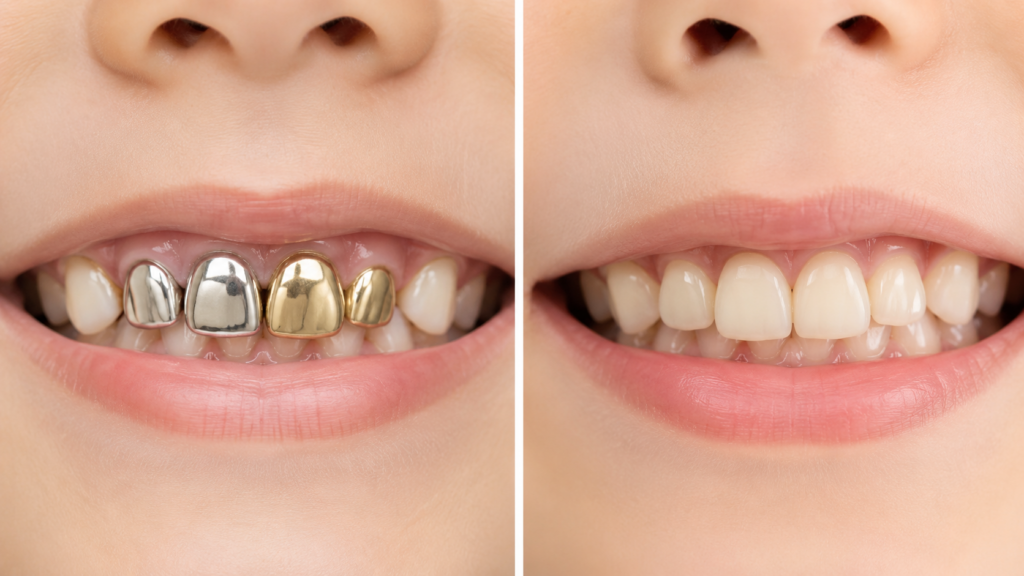
For back teeth (molars), dentists most often use stainless steel crowns; they’re durable, long-lasting, and handle chewing pressure well. For front teeth, tooth-colored crowns are available when appearance matters more. The type of crown you choose depends on which tooth needs it, how much decay is present, and how long the tooth is likely to last before it falls out on its own.
What Types of Crowns Are Used for Kids?
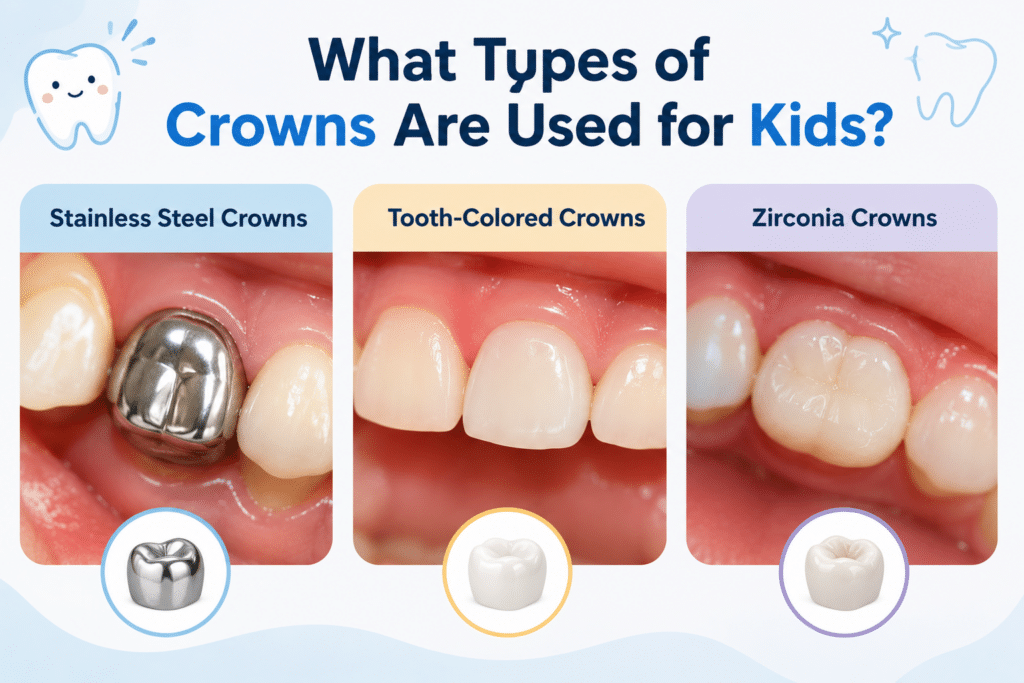
There are three main options, and the right choice depends on which tooth it is and how long it needs to last.
| Crown Type | Material | Best For | Notes |
|---|---|---|---|
| Stainless Steel | Metal | Back molars | Most durable, most common for kids, silver in color |
| Tooth-Colored (Composite) | Plastic-like resin | Front teeth | Blends with natural teeth, less durable than steel |
| Zirconia | Ceramic | Front or back teeth | Strongest tooth-colored option, slightly higher cost |
For back teeth, stainless steel crowns are the standard. They’re tough, long-lasting, and handle the pressure of chewing well. For front teeth, most parents prefer a tooth-colored option so it blends in. Your dentist will recommend based on the tooth’s location and how long it needs to stay in place.
Is a Crown Safe for a 5-Year-Old?
Yes. When placed for the right reason by a dentist who works with children, a pediatric crown is a safe and well-established procedure. Here’s what safety looks like in practice:
Pain is managed. Local anesthesia numbs the tooth area before any work begins. Your child may feel pressure but shouldn’t feel sharp pain. Pediatric dentists take their time, communicate clearly, and help children feel at ease throughout their visit.
The procedure is straightforward. The dentist takes an X-ray, numbs the area, removes decay, prepares the tooth so the crown fits properly, and cements it in place. For most children, the whole visit takes under an hour.
Follow-up keeps everything stable. The dentist will check the bite and fit at a follow-up visit. Any small adjustments can be caught early before they become a problem.
Some children do get anxious, and that’s completely normal. Pediatric dentists are prepared for that. Calm voices, simple explanations, and a child-friendly environment go a long way. For children with higher anxiety or more complex needs, sedation options may also be available.
Symptoms Of An Untreated Tooth In Your Child
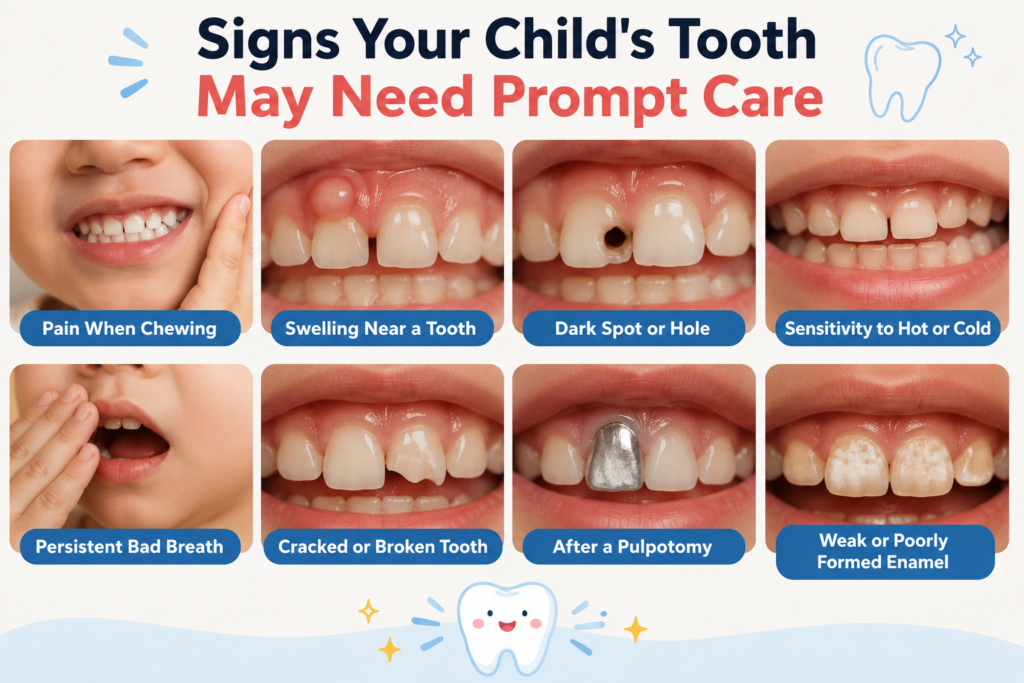
Don’t wait for a scheduled checkup if you notice any of these:
- Pain when chewing – if your child is chewing on one side or avoiding certain foods, a tooth may be too damaged for a filling.
- Swelling near a tooth – puffiness or a bump on the gum near a tooth can indicate infection and needs a same-day or next-day evaluation.
- A visible dark spot or hole – decay that’s reached the inner layers often shows up as a dark discoloration. The earlier it’s treated, the more tooth can be saved.
- Increased sensitivity to hot or cold – this often signals that decay is getting close to the nerve inside the tooth.
- Persistent bad breath – an ongoing odor that brushing doesn’t fix can point to decay or infection hiding in a tooth.
- Cavity Is Too Large for a Filling – baby teeth have thinner enamel than permanent teeth. Decay spreads faster in them.
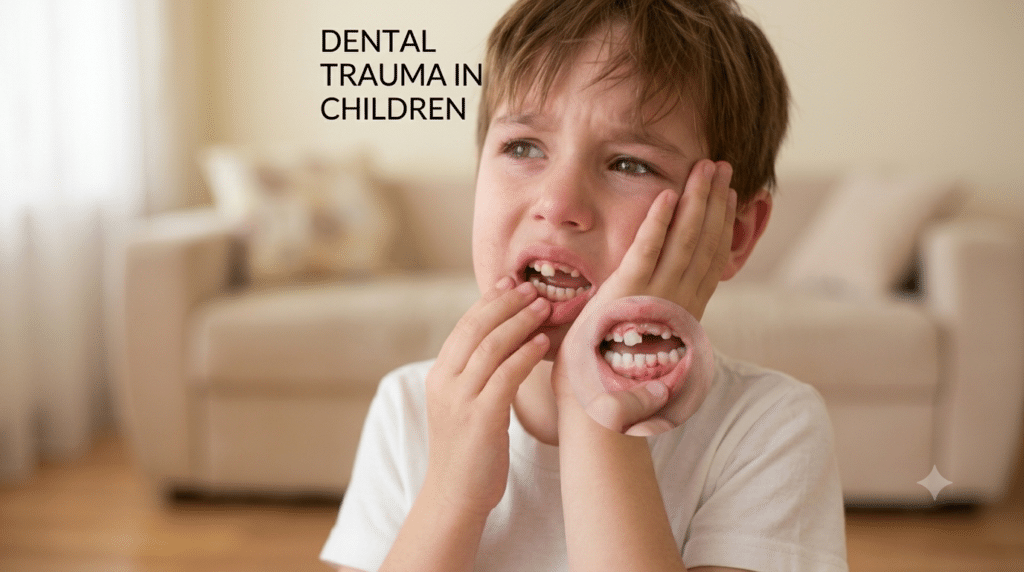
- The Tooth Is Cracked or Broken – kids fall. They bump teeth. A cracked or fractured tooth that’s lost a large piece needs full coverage, not a patch.
- After a pulpotomy – sometimes called a baby root canal- infected tissue from inside the tooth. After that, the tooth is weaker and more likely to break.
- Weak or Poorly Formed Enamel – some children are born with enamel that didn’t develop correctly. It looks chalky or pitted, and it breaks down much faster than normal enamel.
What Happens During the Procedure?
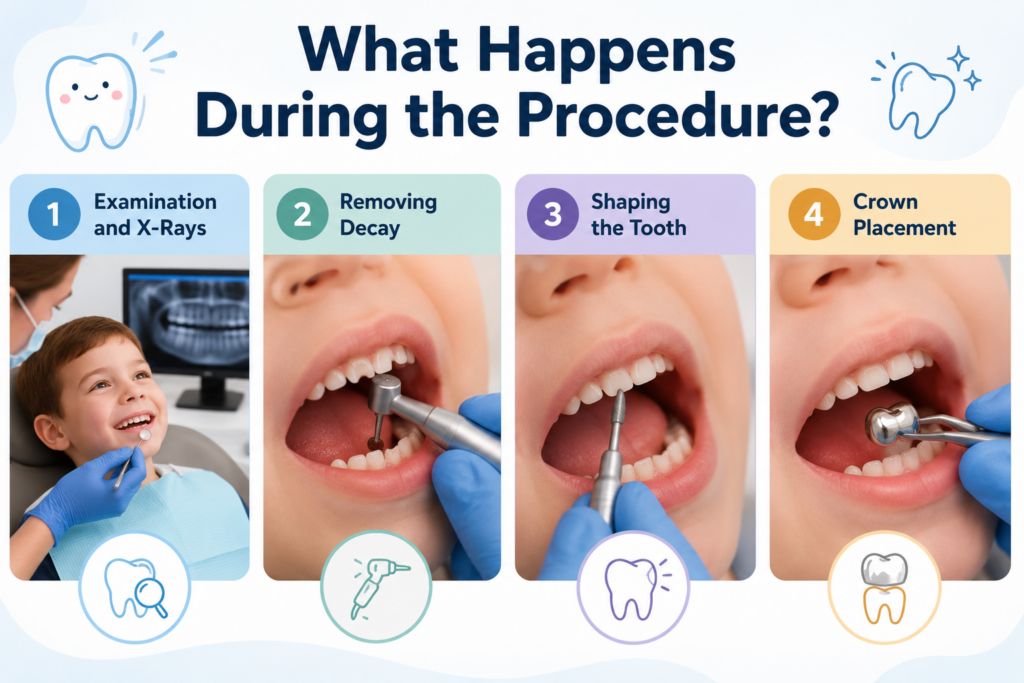
Parents often worry that a crown procedure will be difficult for their child. In reality, it’s usually straightforward.
Step 1: Examination and X-Rays
The dentist evaluates the tooth and determines whether a crown is the best solution.
Step 2: Removing Decay
Any damaged or decayed tooth structure is carefully removed.
Step 3: Shaping the Tooth
The tooth is prepared so the crown can fit securely.
Step 4: Crown Placement
The dentist places the crown over the tooth and bonds it securely into place.
Dentists can often complete a stainless steel crown procedure in a single visit.
Why Do Pediatric Dentists Work to Save Baby Teeth?
This is the question a lot of parents ask, and it’s fair. “It’s just a baby tooth, it’s going to fall out anyway.” But baby teeth do a lot more than most people realize.
They hold space for permanent teeth. Each baby tooth is a placeholder. If one falls out too early because of untreated decay or infection, the surrounding teeth shift into that gap. That crowding often means orthodontic treatment down the road, braces, expanders, or retainers that could have been avoided.
They help with eating. A child with a painful or missing molar avoids hard foods, crunchy fruits, vegetables, and meats. That affects nutrition during the years when kids are growing fast.
They support speech. Certain sounds depend on how the tongue presses against specific teeth. Missing or damaged front teeth can make it hard for kids to say words clearly. This can be an issue at the age when they are learning to speak well.
They guide jaw development. Chewing stimulates healthy bone growth in the jaw. Teeth that hurt or can’t function properly can affect how the jaw develops.
Keeping a baby tooth healthy until it’s ready to fall out naturally is worth it. A crown makes that possible when the tooth is too damaged to survive without one.
Crown vs. Filling: What’s the Difference?
This is one of the most common questions parents ask. Here’s a clear breakdown:
| Factor | Filling | Crown |
|---|---|---|
| Best for | Small to medium cavities | Large cavities, broken, or very weak teeth |
| Coverage | Fills the hole only | Covers the entire tooth |
| Durability | Moderate, can crack under pressure | High, built for chewing stress |
| After a pulpotomy | Not recommended | Standard choice |
| Appearance | Matches tooth color | Stainless steel (back) or tooth-colored (front) |
Frequently Asked Questions
Is it normal for a 5-year-old to need a dental crown?
Yes. Nearly 1 in 4 children has a cavity by age 5, and crowns are a routine treatment when decay is too large for a filling. It’s common and doesn’t mean anything went seriously wrong.
Will getting a crown hurt my child?
No. The area is numbed before the procedure. Your child may feel pressure, but not pain. Most children do well, especially in a pediatric dental environment designed for kids.
How long does a kid’s crown last?
Dentists place pediatric crowns to protect baby teeth until permanent teeth are ready to come in, which typically takes 2 to 5 years.
Does my child need a crown even though the tooth will fall out?
Yes, in most cases. Baby teeth hold space for permanent teeth, support chewing, and aid speech development. Untreated decay can lead to infection, pain, and alignment problems that affect the permanent teeth.
What’s the difference between a stainless steel crown and a tooth-colored crown?
Stainless steel crowns are stronger and longer-lasting; they’re the standard for back molars. Tooth-colored crowns blend naturally with surrounding teeth, making them a popular choice for front teeth. Your dentist will recommend the right type based on the tooth’s location.
Can decay spread from a crowned tooth?
Once a crown is properly placed, it seals the tooth and stops decay from progressing inside it. Good brushing around the crown line prevents new decay from starting at the edges.
How do I prevent my child from needing more crowns?
Brush twice daily with fluoride toothpaste, floss once a day, limit sugary snacks and drinks, and keep up with regular dental checkups every 6 months. Catching small cavities early means fillings instead of crowns.
Your Child’s Smile Deserves the Right Care
A crown at age 5 isn’t a setback. Choosing a crown at the right time protects your child’s teeth, supports healthy eating, and helps guide permanent teeth into place.
If your child needs a crown, the team at Smiley Faces Dental in Corona, NY, will help you understand the process. Additionally, we’ll guide and support your family every step of the way, so you can feel confident about your child’s care. We work with kids ages 2 to 18 and accept most major insurance plans. Call us or schedule an online appointment. Let’s take a look together.