
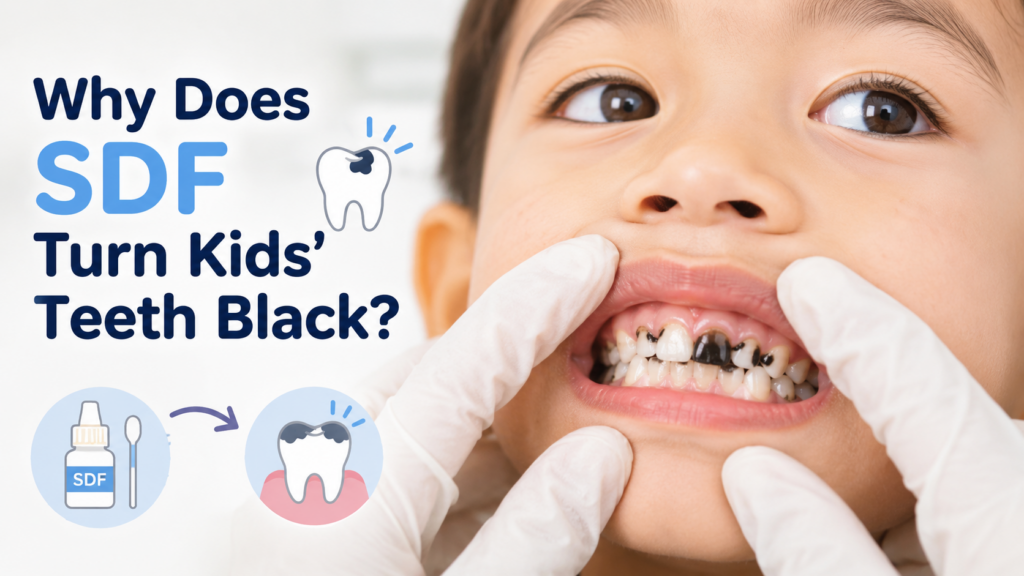
SDF turns teeth black because of a chemical reaction between silver ions and the decayed part of the tooth. It’s not a stain on the whole tooth; only the cavity area darkens. And here’s the thing most parents don’t know: that black color is actually proof the treatment is working. It means the treatment stopped the decay and prevented it from spreading further.
If your child just had SDF applied and you’re looking at a dark spot, wondering what happened, you’re not alone. This is one of the most common concerns we hear from parents. So let’s walk through exactly what’s going on, what’s normal, and what you can do about it.
What Is SDF, and Why Do We Use It on Kids?
SDF stands for silver diamine fluoride. A dentist applies this clear, water-like liquid directly to the cavity using a small brush. The whole procedure takes roughly one to two minutes per tooth. Skip the drill. Avoid the needles. Keep the visit stress-free.
It has two active ingredients that do the heavy lifting. Silver acts as an antimicrobial agent that kills the bacteria causing decay and also hardens the weakened dentin underneath. Fluoride stops the decay from spreading further and helps remineralize the tooth structure around it.
We use SDF most often for younger kids, children with multiple cavities, kids who get anxious in the dental chair, and patients with special health care needs. This treatment helps us stop decay without drilling, which can make dental visits much easier for a 3-year-old.
So, Why Does SDF Turn KidsTeeth Black?
When SDF touches decayed tooth structure, the silver ions in the solution bind to the proteins inside the cavity. This reaction creates silver phosphate and silver sulfide compounds, both of which are dark in color. The result is the dark, almost black discoloration you’re seeing.
The key point: only decayed, porous tooth structure turns black. Healthy tooth enamel doesn’t stain. If your child’s whole tooth looks dark, it’s because the decay has spread further than what was visible on the surface. The cavity turns black, but the treatment helps protect the tooth from further decay.
Does the Black Stain Mean Something Went Wrong?
No, it means something went right.
This trips up a lot of parents, and honestly, it’s natural. We associate dark spots on teeth with problems. But with SDF, the black color is a signal of success, not damage. The treatment kills the bacteria that cause the cavity. The tooth structure has hardened. The treatment stops the decay process and prevents further damage.
Think of it like a scar that forms after a wound heals. The scar isn’t the injury; it’s the evidence that healing happened. That said, we completely understand that a black spot on your child’s tooth isn’t what you signed up for aesthetically. That’s a completely valid concern, and there are options to address it, which we’ll cover below.
What About Staining on Healthy Teeth or Gums?
If SDF only touches healthy, intact enamel, it won’t stain. This is important to understand. The staining reaction requires a porous, decayed structure; it doesn’t happen on sound tooth surfaces.
Sometimes SDF can touch the gums or skin during treatment. When that happens, it may leave a temporary brown mark that fades over time. This fades on its own within one to two weeks and causes no harm. Before applying SDF, we protect the lips and surrounding tissue with petroleum jelly to minimize any contact.
Here’s a quick breakdown of what stains and what doesn’t:
| Area of Contact | Does It Stain? | How Long? |
|---|---|---|
| Decayed tooth structure | Yes, turns black | Permanent (unless restored) |
| Healthy enamel | N/A | N/A |
| Gums or skin | Temporary brownish mark | Fades in 1–2 weeks |
| Existing white fillings | Possibly at open margins | Permanent if the margin is open |
Can the Black Stain Be Covered or Reduced?
Yes. There are two main approaches.
Option 1: Apply potassium iodide (KI) right after SDF. Some dentists use a two-step technique and apply a KI solution for about 90 seconds after the SDF dries. KI turns silver ions into silver iodide, a white compound, before they can react with the tooth.
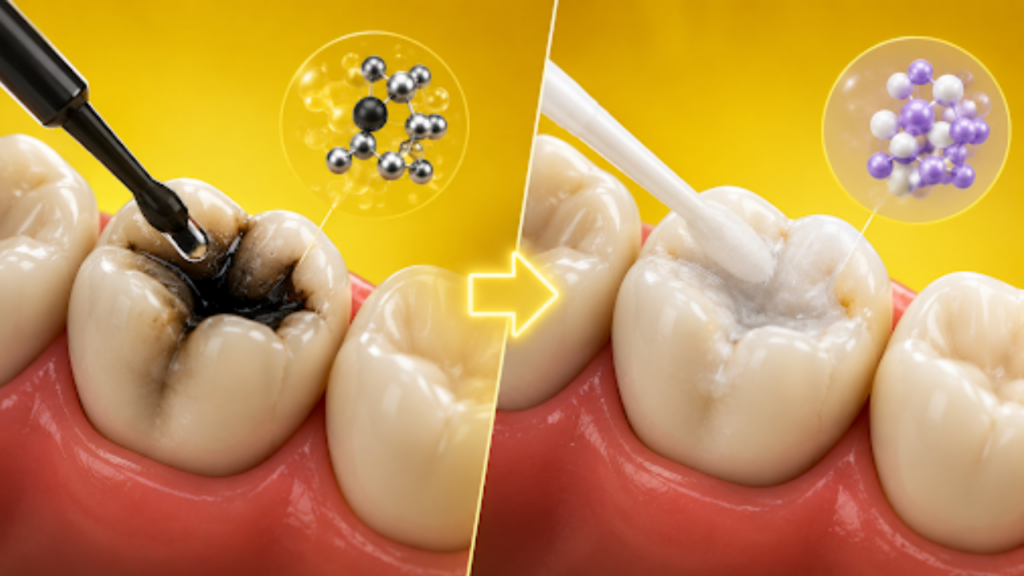
This noticeably reduces how dark the stain appears. It’s not perfect, but it’s a meaningful improvement for parents who are concerned about looks.
Option 2: Cover it with a tooth-colored material. Once the decay stops and the child is ready, the dentist can cover the darkened area with a tooth-colored filling. This restores the appearance of the tooth while keeping the benefits of the SDF treatment underneath. You may still notice a faint shadow at the edges, but it’s far less noticeable than the black stain on its own.
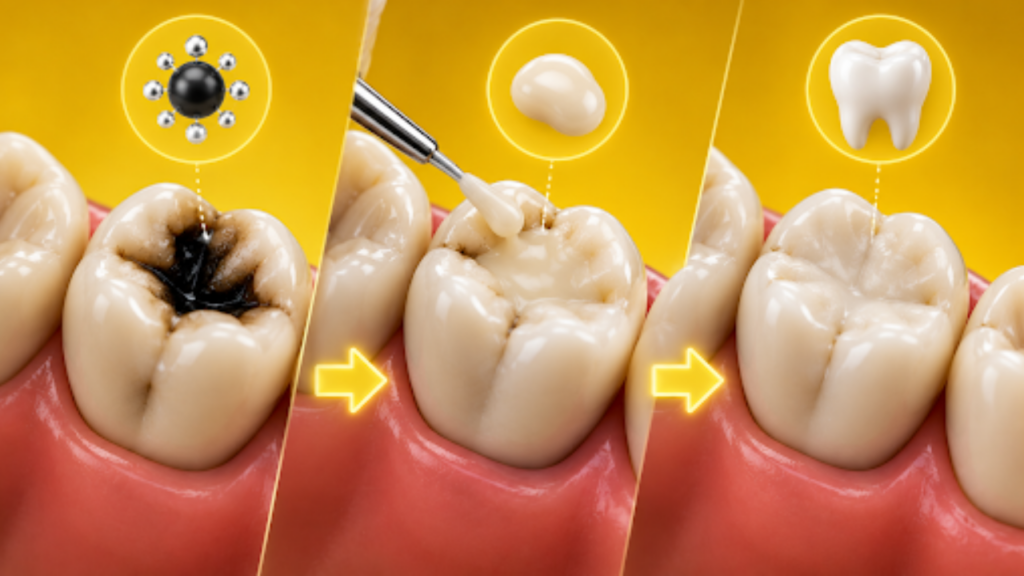
Because baby teeth naturally fall out, many parents choose not to treat the stain once the dentist confirms that the decay has stopped. For teeth in more visible areas, covering them is usually the better choice.
Is the Black Stain Permanent?
Yes. The treated cavity usually stays dark unless the dentist covers it with a filling or crown. SDF chemically bonds to the decayed structure, so it doesn’t rinse out or fade over time on its own.
Keep this in mind: most children who receive SDF are young, and dentists often use this treatment on baby teeth. Those teeth fall out naturally. By age 6 or 7, most children lose these baby teeth and replace them with permanent teeth that won’t stain.
After confirming that the decay has stopped, the dentist may place a filling to restore the tooth’s appearance and function. That covers the stain and gives the tooth a normal appearance.
How Effective Is SDF at Actually Stopping Decay?
SDF stops cavities in 47% to 90% of cases, depending on the cavity’s size and the tooth the dentist treats. Front teeth tend to respond better than back molars.
Applying SDF twice a year significantly improves its success rate. That’s why we often repeat SDF treatment during routine checkups for children with a higher risk of tooth decay. We focus on stopping the decay and preserving the tooth until the dentist restores it or the baby tooth falls out on its own.
SDF is often the most practical way to begin treating multiple cavities in a young child. It buys time, stops the damage, and avoids procedures that would require sedation or multiple services.
FAQ: SDF Turn Kids’ Teeth Black
1. Why does my child’s tooth turn black after SDF treatment?
The silver ions in SDF react with the proteins inside the decayed tooth structure, creating compounds that are dark in color. Only the cavity turns black. The treatment does not affect healthy enamel.
2. Is the black stain on my child’s tooth harmful?
Not at all. The black color means the decay has hardened and stopped. It’s a sign of successful treatment, not damage to the tooth.
3. Will SDF stain my child’s permanent teeth?
SDF only stains decayed tissue. If a dentist applies SDF to a cavity on a permanent tooth, the treated area will darken. However, the dentist can cover it with a tooth-colored filling after the treatment stops the decay.
4. Can a dentist remove or cover the black stain?
Yes. The dentist can place a tooth-colored filling or crown over the darkened area. Some dentists also apply potassium iodide immediately after SDF treatment to help reduce staining.
5. How long does the black stain last?
The stain will remain on the tooth unless the dentist covers the area with a filling or crown. On the skin or gums, a temporary brown mark from accidental contact will fade on its own within 1 to 2 weeks.
6. Does SDF hurt?
No. The application itself is painless. Some children notice a brief metallic taste that goes away within 10 to 15 minutes after the appointment.
The Bottom Line
SDF turns kids’ teeth black because of a chemical reaction between silver and decayed tooth structure. The dark color shows that the treatment worked and stopped the cavity from spreading. Healthy tooth structure won’t stain, and any skin or gum contact fades within a couple of weeks.
If you don’t like the stain, the dentist can help reduce it with KI or hide it with a filling. We’re happy to walk through which approach makes the most sense for your child’s specific situation.
We use SDF to stop cavities, protect teeth, and reduce the need for more extensive dental treatment. If you have questions about your child’s treatment or want to learn more, give us a call or book an appointment.