
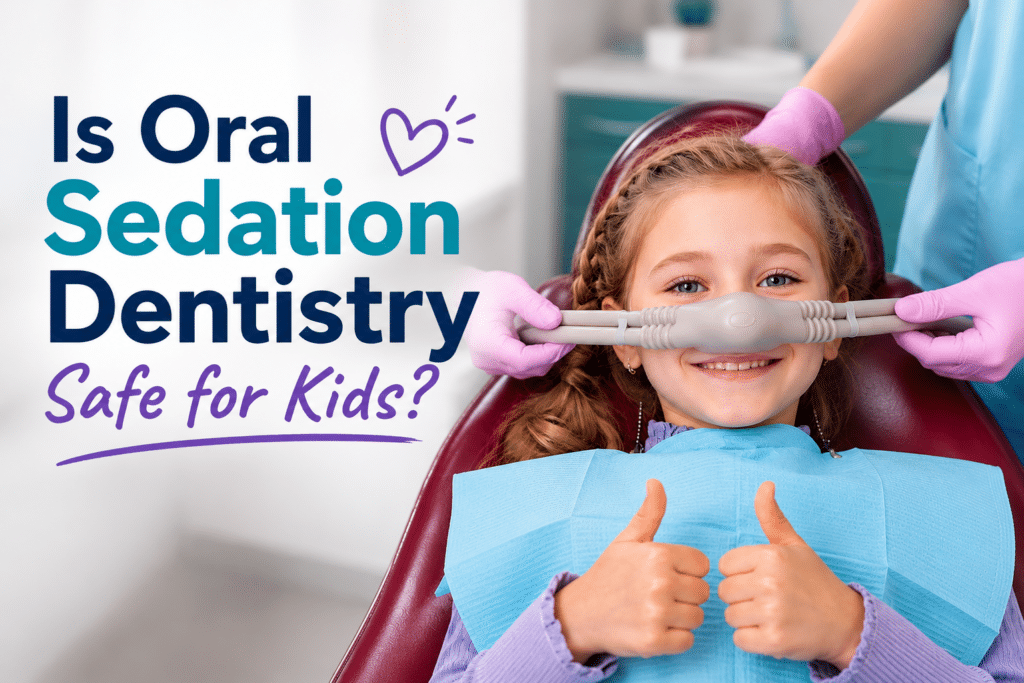
Oral sedation is a medication given by mouth before a dental procedure to help your child stay calm and relaxed. It does not put them to sleep. Your child remains awake, can hear you, and can respond during treatment. Oral sedation dentistry is different from general anesthesia. General anesthesia makes a patient fully unconscious, while oral sedation keeps your child conscious throughout the procedure.
The most common medications used for oral sedation are midazolam and hydroxyzine. These medications are commonly used in children and are prescribed based on your child’s weight, age, and medical history.
Types of Sedation Dentistry for Kids

When parents hear the term “sedation dentistry,” they often assume there’s only one option. In reality, pediatric dentists may use different levels of sedation depending on a child’s age, anxiety level, medical history, and the complexity of the dental procedure.
The most common types of sedation dentistry for children include:
Nitrous Oxide (Laughing Gas)
Nitrous oxide, also called laughing gas, is a mild sedative that your child breathes through a small nose mask. It helps them feel calm and relaxed while staying awake and able to respond during treatment.
The effects wear off quickly after the mask is removed, and most children can return to their normal activities soon after the appointment.
Oral Sedation
Oral sedation is a medication given before treatment to help children feel calm and relaxed. It reduces anxiety while allowing them to stay awake throughout the procedure.
Children may feel sleepy or drowsy, but they can still respond to the dental team. Oral sedation is often recommended for children with moderate dental anxiety, a strong gag reflex, or those who need longer dental treatments.
IV Sedation
IV sedation provides a deeper level of relaxation than oral sedation. Children may be very sleepy during the procedure and may remember little or nothing about the visit afterward.
It is usually recommended for complex dental treatments or children with severe dental anxiety.
General Anesthesia
General anesthesia puts a child into a fully unconscious state during dental treatment. It is usually recommended for extensive procedures, certain special healthcare needs, or when other sedation options are not suitable.
General anesthesia is typically performed in a hospital or surgical center under the supervision of specially trained medical professionals.
How Does Oral Sedation Compare to Other Pediatric Sedation Options?
It helps to understand where oral sedation fits within the full range of options available in pediatric dentistry.
| Sedation Type | How It’s Given | Child’s State | Wears Off | Best For |
|---|---|---|---|---|
| Nitrous Oxide | Inhaled through an N95 mask | Relaxed, fully awake | Within minutes of removal | Mild anxiety, short procedures |
| Oral Sedation | Liquid or pill by mouth | Drowsy, responsive | 2-4 hours | Moderate anxiety, longer procedures |
| IV Sedation | Through a vein | Deeply sedated, may sleep | Several hours | Complex cases, significant anxiety |
| General Anesthesia | Inhaled + IV in hospital | Fully unconscious | Several hours | Extensive surgery, special needs cases |
For children with mild dental anxiety, nitrous oxide (laughing gas) is often enough to help them relax. For children with higher anxiety levels or longer procedures, oral sedation may be recommended.
General anesthesia is usually reserved for more complex cases and is typically performed in a hospital or surgical center.
Is Oral Sedation Actually Safe for Children?
Yes. Oral sedation is safe for children when given by a trained pediatric dentist who follows established safety guidelines.
Before sedation, the dentist reviews your child’s health history, medications, allergies, and weight. During the procedure, oxygen levels, heart rate, and breathing are monitored the entire time. Emergency equipment is required to be on-site.
Serious complications are rare. The risk of untreated dental decay, pain, infection, and spreading damage is typically greater than the risk of properly administered sedation.
What Safety Protocols Are Actually in Place?
Before oral sedation is used, the dentist reviews your child’s medical history, current medications, allergies, and weight to make sure it is a safe option.
During treatment, your child’s breathing, oxygen levels, and heart rate are monitored throughout the procedure.
When performed by a trained dental team, oral sedation has a very low risk of complications. In many cases, leaving dental problems untreated can lead to pain, infection, missed school days, and more difficult dental visits in the future.
Which Kids Actually Need Oral Sedation, and Which Don’t?
Not every child needs oral sedation. Many children can complete dental treatment comfortably with a gentle approach, clear communication, and a child-friendly environment.
Oral sedation may be recommended for children who have severe dental anxiety, have had a difficult dental experience in the past, or are too young to sit through a longer procedure. It can also help children who struggle to stay still or cooperate during treatment.
Children who need extensive work, multiple fillings, crowns, extractions, that would be overwhelming to complete across many stress-filled appointments, and children with sensory sensitivities, developmental differences, or a strong gag reflex that makes standard treatment difficult to complete safely.
Choosing sedation for a child who genuinely needs it isn’t taking a shortcut. It’s removing a barrier that would otherwise prevent them from getting care that protects their health and their future relationship with the dentist.
What Questions Should You Actually Ask Before Agreeing to Sedation?
Here are the questions worth asking, and that any good pediatric practice should be able to answer clearly.
- What medicine will be. Why is it right for my child’s age and weight?
- How will my child be monitored during the procedure?
- What’s the emergency plan if something unexpected happens?
- Will my child be able to go to school the same day?
- Does my insurance cover pediatric sedation?
At Smiley Faces Dental, we welcome every one of these questions. An informed parent is genuinely the best partner we can have in the room.
Frequently Asked Questions About Oral Sedation for Kids
1. Is sedation the same as general anesthesia?
No, they’re completely different. General anesthesia renders a child fully unconscious and requires a hospital or surgical center setting. Oral sedation produces a relaxed, drowsy state while the child remains conscious and responsive throughout the procedure.
2. Will my child remember the appointment?
Often, not very much. Oral sedation medications like midazolam have an amnesic effect, meaning most children have little to no clear memory of the procedure. For anxious kids, this is genuinely one of the benefits; there’s no traumatic memory to carry forward.
3. At what age can a child receive sedation?
There’s no universal minimum age; it depends on the child’s weight, health, and the specific medication being used. At Smiley Faces Dental, we see children ages 2 to 18, and sedation decisions are made individually after a full health history review.
4. Can my child eat before a sedation appointment?
No. Fasting is required before oral sedation; typically, no solid food for 6 hours and no clear liquids for 2 hours before the appointment. Your dentist will give you exact instructions. Following them precisely is important for safety.
5. How long does oral sedation last?
The sedation effects typically last 2 to 4 hours after the medication is given, though your child may feel groggy or tired for the rest of the day. Plan for a quiet day at home, no school, no sports, and close supervision until they’re fully alert.
6. What are the risks of oral sedation in children?
Possible minor side effects include nausea, vomiting, or prolonged drowsiness. Your child’s vital signs are continuously monitored to catch and respond to any changes immediately.
7. Can a child have oral sedation if they take daily medication?
Possibly yes, but it requires a complete medication review first. Some medications can interact with sedation drugs. Always give your dentist a full, up-to-date list of medications, including supplements, well before the appointment.
Still Not Sure? Let’s Just Talk.
There’s no obligation to ask questions. If your child has been recommended for oral sedation, or if you’re wondering whether it might be the right option, the most useful next step is a straightforward conversation, not a commitment.
Parents across Corona, NY, and the surrounding Queens community bring their kids to Smiley Faces Dental for exactly this kind of honest, unhurried conversation. Our team works with children ages 2 to 18, accepts most major dental insurance plans, and is open Monday through Saturday.
Call us or schedule a consultation. We’ll walk through your child’s specific situation, answer every question you have, and help you make the decision that’s actually right for your family.