
Why 2-Year-Old Need Dental Sedation
Is Dental Sedation Safer Treatment
Sedation Medication Calculated
Yes. A dental sedation for 2-year-old toddler when it is medically appropriate and provided by trained pediatric dental professionals following established safety guidelines.
Many parents in Corona, Elmhurst, Jackson Heights, and throughout Queens feel nervous about even asking this question. If your toddler has never seen a dentist before, understanding what to expect during a baby’s first dental visit can help reduce anxiety for both parents and children. It is understandable. Seeing such a young child need dental treatment can be overwhelming. The good news is that pediatric dentists regularly treat toddlers and carefully tailor sedation to each child’s age, weight, health history, and dental needs.
If your child needs treatment but struggles to sit still, has severe anxiety, or requires extensive care, sedation may help make the experience safer and less stressful.
Why Would a 2-Year-Old Need Dental Sedation?
Dental sedation can help a toddler receive necessary dental care safely and comfortably when traditional approaches are not enough. A pediatric dentist may recommend sedation when a child:
- Has multiple cavities that need treatment
- Experiences significant dental anxiety or extreme fear
- Is unable to sit still long enough for safe, effective care
- Has special healthcare needs or sensory challenges
- Has had previous traumatic or difficult dental experiences
- Requires extensive treatment that is best completed in a single visit
In some cases, deep cavities or infections may require procedures such as pulp therapy in pediatric dentistry to preserve baby teeth and prevent pain or the spread of infection. For some toddlers, fear, age, or developmental factors can make dental treatment difficult or even unsafe. Sedation helps children stay calm and comfortable, allowing the dentist to provide the care they need while reducing stress for both the child and parents.
Is Dental Sedation Safer Than Delaying Treatment for a 2-Year-Old?
In many cases, yes. Dental sedation can be very safe when provided by qualified professionals who follow the guidelines of the American Academy of Pediatric Dentistry (AAPD) and the American Academy of Pediatrics (AAP). Safety measures include a thorough medical review, weight-based medication dosing, continuous monitoring during treatment, emergency preparedness, and clear recovery instructions. [1]
Many parents worry that age alone makes sedation risky, but pediatric dentists routinely care for toddlers and recommend sedation based on a child’s individual needs, not simply their age.
For children who need treatment, delaying care is often the greater risk. Untreated dental problems can lead to pain, infection, difficulty eating, sleep disturbances, emergency visits, and even damage to developing permanent teeth. Treating dental issues early can help prevent more serious complications later.
How Is Sedation Medication Calculated for Toddlers?
Pediatric sedation medications are based on weight, not simply age.
Before recommending sedation, the dentist evaluates:
- Body weight
- Medical conditions
- Allergies
- Previous reactions to medications
- Length and complexity of treatment
This individualized approach helps maximize safety while providing effective sedation.
What Types of Sedation Are Used for Toddlers?
Several options are available depending on your child’s needs. Your pediatric dentist will recommend the most appropriate approach based on your child’s health, behavior, and treatment requirements. Learn more about our sedation dentistry services and available options for children.
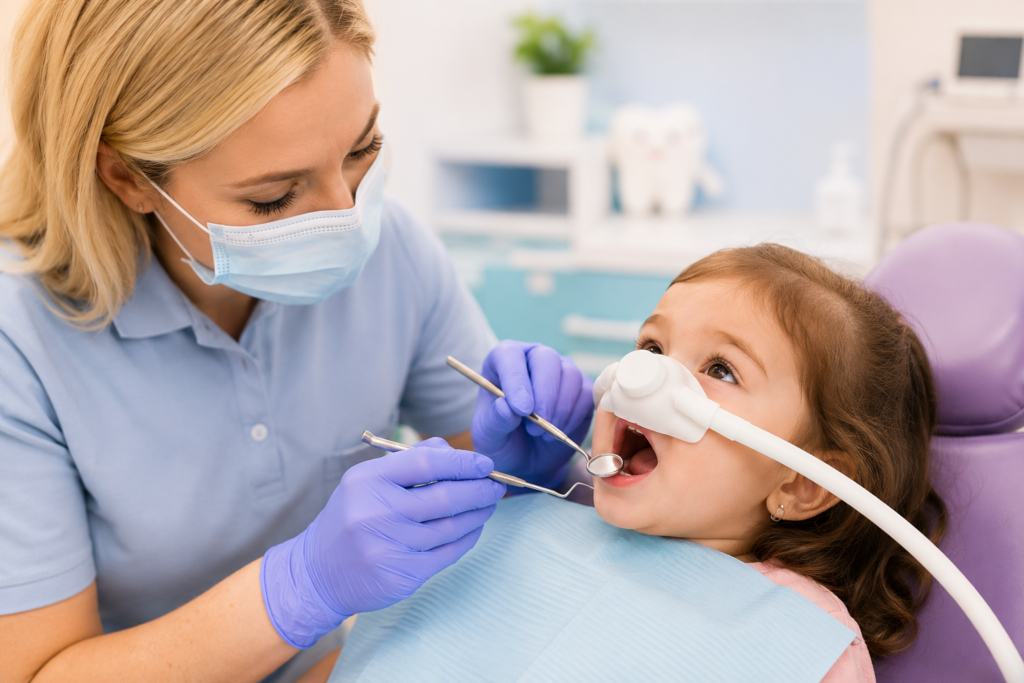
Nitrous Oxide (Laughing Gas)
Best for mild anxiety and shorter appointments.
Benefits include:
- Quick onset
- Child remains awake
- Fast recovery
- Minimal lingering effects
Also Read:
Nitrous oxide is one of the most commonly used forms of pediatric sedation.
Oral Conscious Sedation
Oral Sedation is best for moderate anxiety or longer procedures.
Benefits include:
- Helps children relax
- Creates drowsiness without complete unconsciousness
- Makes treatment easier to complete
Children generally remain responsive and continue breathing normally.
General Anesthesia
Best for extensive treatment, severe anxiety, or very young children who cannot safely cooperate.
General anesthesia allows the child to sleep completely during treatment.
It may be recommended when:
- Numerous cavities are present
- Multiple procedures are required
- Previous attempts at treatment have failed
- A child has special healthcare needs
Why Do Some Toddlers Need Sedation Instead of Multiple Visits?
One comfortable appointment is often better than several stressful ones.
Less Emotional Trauma
Repeated frightening visits can create lifelong dental anxiety.
Better Treatment Quality
Dentists can focus on completing treatment safely and efficiently.
Fewer Appointments for Parents
Completing treatment in one visit reduces disruption for families.
Positive Dental Experiences
Comfortable treatment helps children build trust and confidence for future visits.
What Happens Before and During Dental Sedation?
Before Sedation
Your child’s pediatric dentist performs a thorough evaluation to make sure treatment can be completed as safely as possible. The team will review:
- Your child’s medical history and any underlying health conditions
- Allergies and current medications
- Previous surgeries or anesthesia experiences
- Airway health and other factors that may affect sedation
- The risks and benefits of the recommended sedation option
Parents also receive important instructions about:
- Eating and drinking restrictions before the appointment
- What to bring on the day of treatment
- What to expect during recovery and after returning home
During Sedation
Continuous monitoring of breathing, heart rate, oxygen levels, and overall responsiveness is recommended by the AAPD’s sedation best practices to help maximize patient safety. The dental team closely tracks: [2]
- Breathing
- Heart rate
- Oxygen levels
- Blood pressure
- Overall comfort and responsiveness
This constant monitoring allows the team to detect and address any concerns immediately. The goal is to keep your child comfortable while providing the necessary dental treatment as safely as possible.
What Is Recovery Like After Dental Sedation?
Most toddlers recover smoothly and return to normal activities within several hours.
It is normal to notice:
- Sleepiness
- Grogginess
- Mild irritability
- Reduced appetite
These effects usually improve as the medication wears off.
Call Your Dentist Immediately If Your Child Experiences:
- Difficulty breathing
- Persistent vomiting
- Excessive drowsiness
- Trouble waking up
- Unusual behavior
Fortunately, serious complications are uncommon when sedation is properly administered.
Frequently Asked Questions
1. Can dentists sedate a 2-year-old?
Yes. Pediatric dentists regularly provide sedation for toddlers when medically appropriate and when recommended safety guidelines are followed.
2. Is dental sedation dangerous for toddlers?
Serious complications are rare when sedation is performed by trained professionals using proper monitoring and safety protocols.
3. What is the safest sedation for a 2-year-old?
There is no one-size-fits-all answer. The safest option depends on your child’s health, anxiety level, and treatment needs.
4. Can cavities wait until my child gets older?
Usually not. Tooth decay can worsen quickly and may affect both oral health and overall well-being.
5. How long does dental sedation last?
Recovery varies depending on the type of sedation. Nitrous oxide wears off quickly, while oral sedation and general anesthesia may require several hours of recovery.
The Bottom Line
Yes, a 2-year-old can safely receive dental sedation when it is recommended by an experienced pediatric dentist and performed according to established safety standards.
Sedation is not about making treatment easier for the dentist. It is about helping children receive the care they need while minimizing fear, discomfort, and stress.
For many families in Corona, Elmhurst, Jackson Heights, and surrounding Queens neighborhoods, sedation allows toddlers to get healthy smiles without developing lifelong dental anxiety.

Sources
- American Academy of Pediatric Dentistry (AAPD). Policies and Recommendations. https://www.aapd.org/research/oral-health-policies–recommendations/
- American Academy of Pediatric Dentistry (AAPD). Best Practices. https://www.aapd.org/research/oral-health-policies–recommendations/best-practices/
- American Academy of Pediatrics (AAP). HealthyChildren.org. https://www.healthychildren.org/