

Hearing that your child may need a tooth extraction can be worrying. Many parents wonder if the tooth can be saved or if it really needs to be removed. In many cases, dentists can treat the problem and save the tooth. However, sometimes pediatric tooth extraction is the best way to stop pain, treat an infection, or prevent other dental problems.
If your child has tooth pain, swelling, a badly damaged tooth, or a serious cavity, understanding when a tooth extraction may be needed can help you make the best decision for their dental health.
What Is a Pediatric Tooth Extraction and Is It Safe for Children?
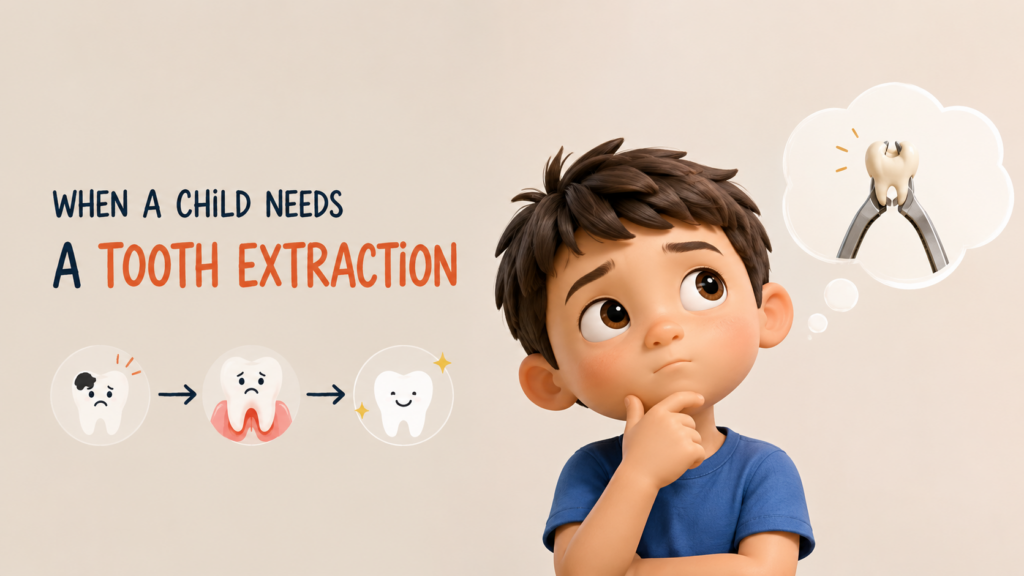
A pediatric tooth extraction is the removal of a child’s tooth when it can’t be saved or is causing problems.
The goal isn’t just to take the tooth out. It’s to stop pain, clear an infection, protect the nearby teeth, and help your child’s mouth grow the right way.
Before recommending an extraction, the dentist checks the tooth, your child’s age, and how removing it may affect the adult teeth that will come in later.
Pediatric tooth extraction is a common and safe procedure when performed by an experienced pediatric dentist.
Modern techniques and anesthesia help keep children comfortable throughout treatment.
Are Baby Teeth and Permanent Teeth Removed for the Same Reasons?
Dentists can remove both baby teeth and permanent teeth when they cause problems, although the reasons often differ. Because baby teeth eventually fall out on their own, a dentist may recommend removing one if severe damage, infection, or crowding prevents a permanent tooth from erupting properly.
Permanent teeth are usually removed only when there is no better treatment option. This may happen if a tooth is severely damaged, has a serious infection, or needs to be removed to create space during orthodontic treatment. Because permanent teeth are meant to last a lifetime, dentists typically try to save them whenever possible before considering extraction.
What Are the Signs That a Child May Need a Tooth Extraction?

Some dental problems can be treated, while others may require a tooth extraction. Common signs include ongoing tooth pain, swelling, severe decay, infection, or a damaged tooth that cannot be repaired.
Ongoing Tooth Pain
A toothache that continues for several days should not be ignored.
Persistent pain may indicate deep decay, infection, or damage inside the tooth.
Swollen Gums or Facial Swelling
Swelling around the gums, jaw, or face can be a sign of infection.
Dental infections can spread if left untreated, making prompt evaluation important.
Severe Tooth Decay
Large cavities that have destroyed most of the tooth structure may leave few treatment options.
In some situations, extraction becomes the safest solution.
Loose Baby Teeth That Do Not Fall Out Naturally
A baby tooth that remains in place while the permanent tooth begins to erupt behind it may need to be removed.
This can help guide the permanent tooth into a healthier position.
Broken or Damaged Teeth
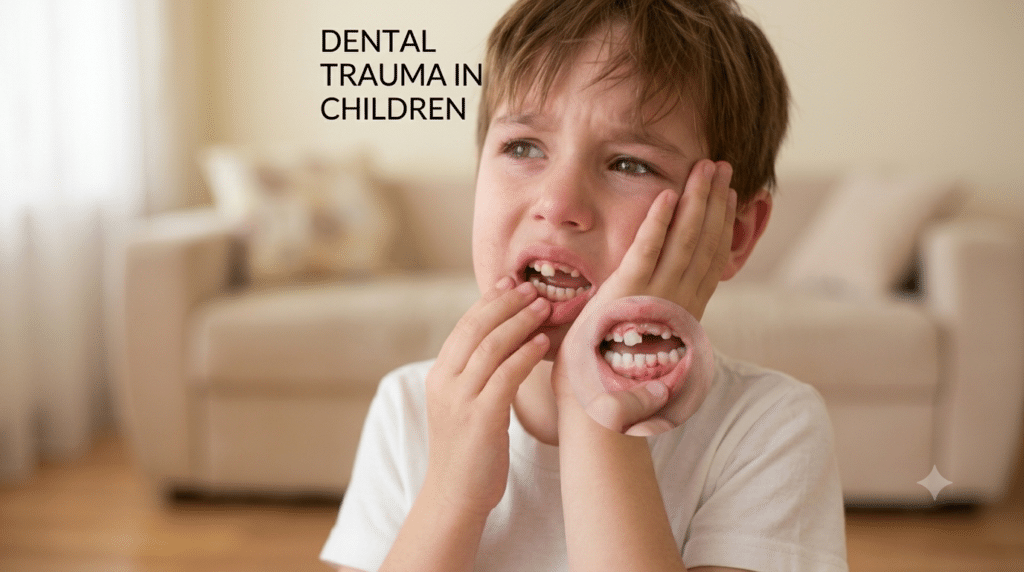
Falls, sports injuries, and accidents can sometimes cause severe tooth fractures.
If the damage cannot be repaired, extraction may be recommended.
Quick Parent Checklist
Your child should be evaluated if they have:
- Constant tooth pain
- Swollen gums
- Facial swelling
- Severe cavities
- Dental trauma
- Difficulty chewing
- Signs of infection
What Happens During a Pediatric Tooth Extraction?

Most pediatric tooth extractions are straightforward procedures.
Understanding the process can help parents and children feel more comfortable.
Initial Examination and X-Rays
The dentist first examines the tooth and may take X-rays to assess its condition.
This helps determine the safest treatment approach.
Numbing the Area
A local anesthetic is used to numb the area around the tooth.
The goal is to keep the child comfortable during the procedure.
Removing the Tooth
Once the area is numb, the dentist gently removes the tooth.
Many extractions take only a short amount of time.
Post-Treatment Instructions
Parents receive instructions on:
- Managing discomfort
- Eating after treatment
- Keeping the area clean
- Supporting healing
Will My Child Need Sedation for a Tooth Extraction?
Not every child needs sedation for a tooth extraction. Many children can have the procedure comfortably with medicine that numbs the area around the tooth. This helps prevent pain during treatment while allowing the child to stay awake.
Some children may benefit from additional help to feel relaxed during the procedure. If your child feels extremely nervous, has trouble staying still, or needs a complex procedure, the dentist may recommend sedation to help them stay comfortable. Some children benefit from sedation because they feel anxious, have difficulty sitting still, or need more extensive treatment. Your dentist will discuss the options and recommend what is best for your child.
What Should Parents Expect After a Pediatric Tooth Extraction?
Most children recover well after a tooth extraction. In many cases, they start feeling better within a few days. Following the dentist’s instructions at home can help your child heal comfortably and avoid unnecessary problems.
What Is Normal After a Tooth Extraction?
It is common for children to have some mild symptoms after the procedure.
Your child may experience:
- Mild soreness around the extraction site
- Slight swelling of the gums
- Minor discomfort when eating or chewing
These symptoms are usually temporary and often improve within a few days.
What Can My Child Eat After a Tooth Extraction?
Soft foods are the best choice while the area heals. They are easier to eat and less likely to irritate the extraction site.
Good options include:
- Yogurt
- Applesauce
- Mashed potatoes
- Smoothies
- Scrambled eggs
- Oatmeal
- Soup that is not too hot
Make sure your child drinks plenty of water unless the dentist advises otherwise.
What Should My Child Avoid?
For the first few days, it is important to avoid activities and foods that may slow healing or cause discomfort.
Your child should avoid:
- Running, jumping, or heavy physical activity
- Drinking through a straw
- Hard, crunchy, or sticky foods
- Touching the extraction area with their fingers or tongue
Giving the area time to heal can help reduce discomfort and support a smoother recovery.
When Should Parents Call the Dentist?
While most children heal without any problems, some symptoms should be checked by a dentist.
Contact the dental office if your child has:
- Severe pain that does not improve
- Heavy or ongoing bleeding
- Swelling that gets worse instead of better
- A fever
- Any symptoms that seem unusual or concerning
Recovery Timeline
First 24 Hours
The first day is focused on rest. Follow all aftercare instructions and encourage your child to take it easy.
Days 2 – 3
Any soreness or swelling should start to improve. Many children feel much more comfortable during this time.
Days 4 – 7
The area continues to heal, and most children can return to their normal routine. Any remaining discomfort is usually minimal.
Will My Child Need a Space Maintainer After Tooth Extraction?
Sometimes. If a baby tooth is removed much earlier than expected, the teeth next to it may start moving into the space. When this happens, there may not be enough room for the permanent tooth to come in properly later on.
To help keep that space open, the dentist may recommend a space maintainer. This small dental device holds the space until the permanent tooth is ready to come in.
Not every child needs a space maintainer after a tooth extraction. It depends on which tooth was removed and how soon the permanent tooth is expected to appear. Your dentist will check your child’s teeth and let you know if one is needed.
Frequently Asked Questions
1. Does pediatric tooth extraction hurt?
The procedure itself should not be painful because the area is numbed before treatment. Some mild soreness afterward is normal.
2. How long does a pediatric tooth extraction take?
Many pediatric tooth extractions can be completed within 20 to 40 minutes, depending on the complexity of the case.
3. What happens if an infected baby tooth is not removed?
An untreated infection may worsen and affect nearby teeth and surrounding tissues. Prompt evaluation is recommended.
4. Will my child need a space maintainer after a tooth extraction?
A space maintainer may be recommended if a baby tooth is removed early and the permanent tooth is not ready to come in yet.
5. Is sedation safe for pediatric tooth extraction?
Trained professionals can use sedation safely to help children stay comfortable during dental treatment.
6. How long does recovery take after a pediatric tooth extraction?
Most children begin to feel better within a few days, although complete healing may take longer, depending on the tooth and procedure.
Conclusion
Before recommending an extraction, dentists look at all available treatment options. Sometimes a dentist cannot save a tooth. In those cases, removing it can help prevent pain, infection, and other dental problems.
Common reasons include severe decay, infection, trauma, overcrowding, and delayed tooth loss. Fortunately, most children recover quickly with proper care and follow-up.
If your child is experiencing tooth pain, swelling, signs of infection, and a dental injury, an evaluation by a pediatric dentist in Corona, NY, can help determine the most appropriate treatment and protect their long-term oral health.