
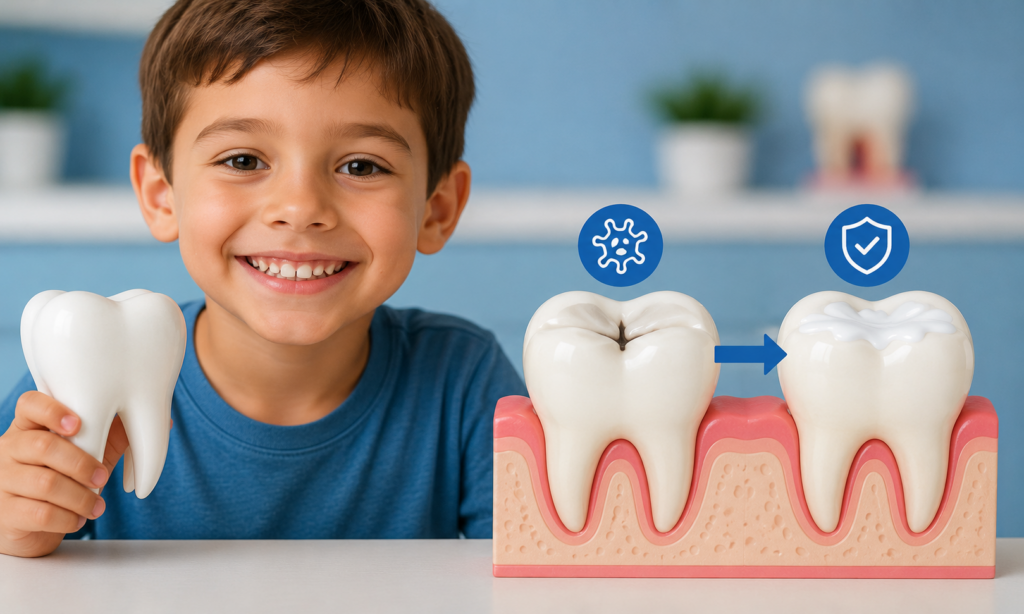
Cavities are one of the most common dental problems in children. Many start in the back teeth, where food and bacteria can collect in deep grooves that are difficult to clean. Even children who brush every day can develop decay in these areas. Dental sealants are thin protective coatings placed on the chewing surfaces of molars. They help prevent cavities by covering deep grooves where food and bacteria often collect.
Dental sealants are a simple way to protect these vulnerable teeth before cavities start. For many families in Corona, NY, sealants are an important part of preventive dental care because they help reduce the risk of future fillings and dental treatment. Dental sealants can prevent up to 80% of cavities in molars, making them one of the most effective cavity-prevention treatments available for children.
Why Do Children’s Molars Get More Cavities Than Other Teeth?
Children’s molars are more likely to develop cavities because they have deep grooves on their chewing surfaces. Food and bacteria can easily get trapped in these areas, making them harder to keep clean.
Unlike the front teeth, which have smoother surfaces, molars have small grooves and uneven areas where buildup can collect. These spots are often difficult for children to reach while brushing, especially in the back of the mouth.
Because of this, cavities often start in the molars before parents notice any signs of a problem. The first and second permanent molars are usually at the highest risk because they come in at a young age and are used every day for chewing.
Keeping these teeth clean and protecting them early can help lower the risk of cavities and support better oral health as children grow.
How to Stop Sealants from Cavities Before They Start?
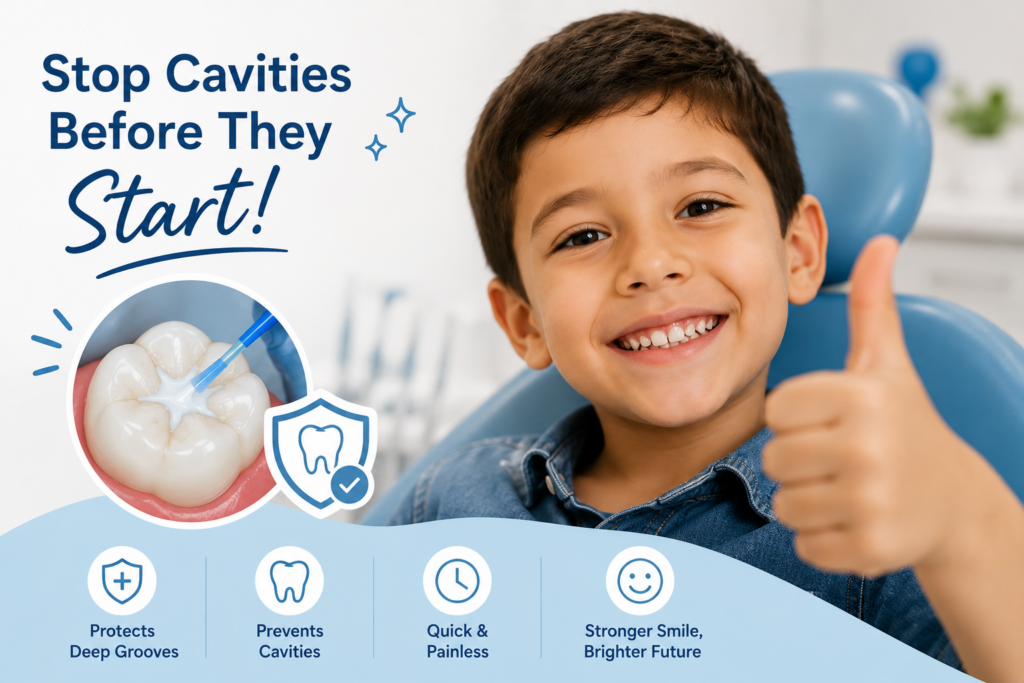
Dental sealants help prevent cavities by covering the deep grooves on the chewing surfaces of back teeth. These grooves can easily trap food and bacteria, making them difficult to clean completely with a toothbrush.
Once a sealant is applied, it creates a smooth protective layer over the tooth. This helps keep food and bacteria out of the grooves and reduces the chance of cavities developing.
Protecting teeth before a cavity forms is usually easier, more comfortable, and less expensive than treating decay later. For this reason, many dentists recommend sealants as a preventive treatment for children.
Which Children Benefit Most From Dental Sealants?
Most children can benefit from dental sealants, but they may be especially helpful for children who:
- Have had cavities before
- Have deep grooves in their back teeth
- Snack frequently throughout the day
- Drink sugary beverages often
- Have difficulty brushing their back teeth thoroughly
- Are at a higher risk of developing cavities
Even children who brush every day can miss small areas on the chewing surfaces of their back teeth. Dental sealants help protect these hard-to-clean areas and lower the risk of tooth decay.
Before recommending sealants, a dentist will examine your child’s teeth and evaluate their risk of developing cavities. This helps determine whether sealants are the right choice for their needs.
What Happens During a Dental Sealant Process?
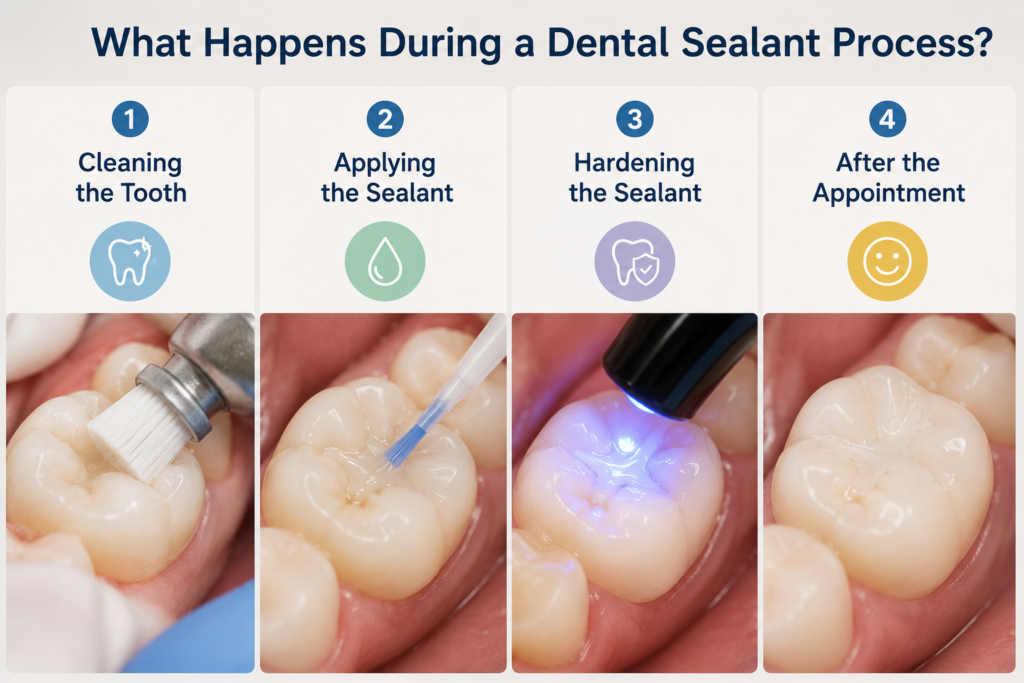
Getting dental sealants is a quick and comfortable process. The treatment is usually completed during a regular dental visit and does not involve injections or drilling. Most children can return to their normal activities right away.
Cleaning the Tooth
The dentist first cleans the tooth to remove any food particles or buildup. The tooth is then dried so the sealant can stick properly.
Applying the Sealant
Next, the sealant is carefully placed on the chewing surface of the back tooth. The material flows into the small grooves where cavities are most likely to develop.
Hardening the Sealant
Once the sealant is in place, a special light may be used to help it harden. This allows the sealant to stay securely on the tooth and start protecting it right away.
After the Appointment
Children can usually eat and drink normally soon after the treatment. There is no recovery time, and most children are able to go back to school or their usual activities the same day.
Are Dental Sealants Worth It for Children Who Have Never Had a Cavity?
Yes. Dental sealants can be a good option even for children who have never had a cavity. The goal is to protect healthy teeth before problems start, not after a cavity develops.
Many parents think children only need dental treatment when they have a dental problem. However, preventing cavities is often easier than treating them later. Sealants help protect the back teeth, where cavities are most likely to form.
By reducing the risk of tooth decay, sealants can help children avoid fillings, tooth pain, and additional dental visits. They can also protect teeth for several years, helping children maintain healthier smiles as they grow.
For many families, dental sealants are a simple way to protect permanent teeth and lower the chances of needing dental treatment in the future.
Dental Sealants vs Fluoride Treatments: Do Children Need Both?
Yes. Dental sealants and fluoride treatments protect teeth in different ways, and many children benefit from having both.
Dental sealants protect the chewing surfaces of the back teeth, where cavities often start. Fluoride helps make teeth stronger and protects all teeth from tooth decay.
| Feature | Dental Sealants | Fluoride Treatment |
|---|---|---|
| Protection Area | Protect the chewing surfaces of back teeth | Help strengthen all teeth |
| Focus | Focus on areas where cavities commonly form | Protect the entire mouth |
| Duration | Can last for several years | Need to be applied regularly |
| How It Works | Cover and protect deep grooves in teeth | Help teeth stay strong against decay |
Because they work differently, sealants and fluoride are often used together. While fluoride helps protect all teeth, sealants provide extra protection for the back teeth that are most likely to develop cavities.
Why Do Some Children Still Get Cavities After Receiving Sealants?
Dental sealants can help lower the risk of cavities, but they do not protect every part of every tooth. Sealants are placed only on the chewing surfaces of the back teeth, so cavities can still develop in other areas of the mouth.
For example, food and bacteria can collect between teeth or near the gums, where sealants do not provide protection. This is why children still need to brush and floss every day, even after getting sealants.
Regular dental checkups are also important. During these visits, the dentist can make sure the sealants are still protecting the teeth and check for any early signs of cavities. When combined with good brushing, flossing, and routine dental care, sealants provide the best protection against tooth decay.
Why More Parents in Corona, NY, Are Choosing Dental Sealants for Their Children
Many parents in Corona, NY, choose dental sealants because they want to help protect their children’s teeth before cavities develop. Instead of waiting for a problem to occur, sealants provide an extra layer of protection for the back teeth, where cavities are most common.
Benefits of Protecting Teeth Early
Getting sealants at the right time can help:
- Lower the risk of cavities
- Reduce the need for fillings
- Keep teeth healthier as children grow
- Make dental care easier to manage
How Can Sealants Help Reduce Future Dental Treatment?
When cavities are prevented, children are less likely to need treatments such as fillings or other dental procedures later. Protecting teeth early can save time and help avoid future dental problems.
Why Is It Important to Protect Permanent Teeth?
Permanent teeth should last a lifetime with proper care. The back teeth are often the most likely to develop cavities because they are harder to clean. Dental sealants help protect these teeth during the years when they need it most.
Frequently Asked Questions
1. Are dental sealants safe for kids?
Yes. Dental sealants have been used for many years and are considered safe for children.
2. At what age should children get dental sealants?
Most children benefit when their permanent molars erupt, usually around ages six and twelve.
3. How effective are dental sealants at preventing cavities?
Sealants can prevent up to 80% of cavities in molars during the first two years after placement.
4. Do dental sealants hurt?
No. The procedure is painless and does not require injections or drilling.
5. Can cavities form underneath dental sealants?
While uncommon, cavities can develop if a sealant becomes damaged or wears away over time. Regular dental checkups help monitor their condition.
Conclusion
Dental sealants are a simple and effective way to help protect children’s back teeth from cavities. By covering the deep grooves where food and bacteria often collect, sealants can reduce the risk of tooth decay and help keep permanent teeth healthy.
Many children can benefit from dental sealants, especially during the years when their permanent molars first come in. When combined with regular brushing, flossing, and routine dental checkups, sealants provide an extra layer of protection against cavities.
If you are considering dental sealants in Corona, NY, talk to your child’s dentist to find out whether they are the right choice for protecting your child’s smile.