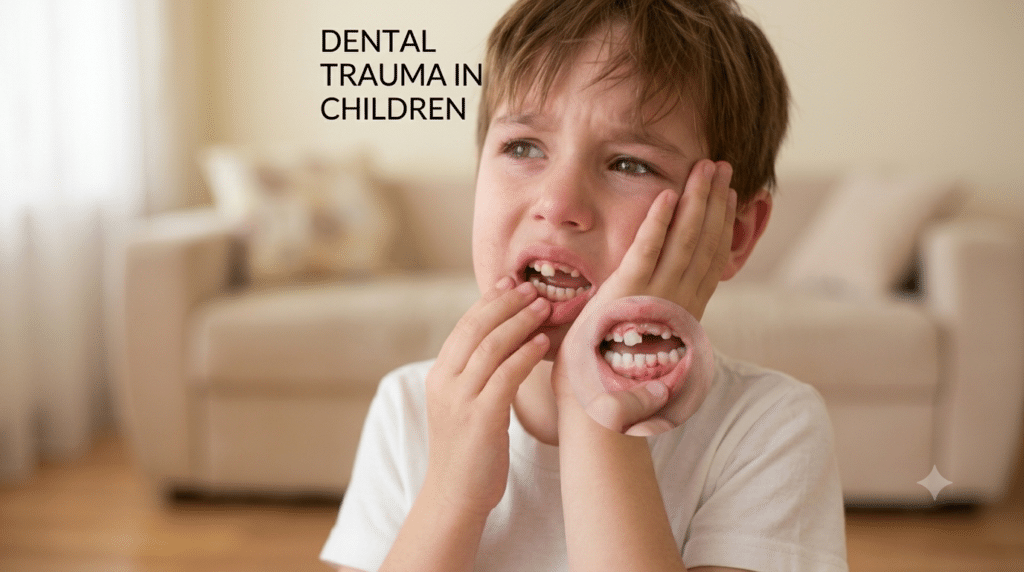

Parents should know that children who cry, freeze, or refuse to open their mouths at the dentist are not misbehaving. They’re anxious. Dental anxiety is a real physical response.
It does not reflect a character flaw or poor parenting. Laughing Gas for Kids Dentist exists precisely for this situation. Nitrous oxide is a safe and effective oral sedation option for children.
Why Do So Many Kids Struggle at the Dentist?
Dental anxiety in children isn’t rare; it’s the norm. Studies estimate that 1 in 3 young children, or “around 30% of children aged 2–6,” experience dental fear significant enough to avoid or disrupt care. But the actual number of kids who feel some level of nervousness? Much higher. [1]
The reasons are layered. Children process sensory input more intensely than adults. Strange sounds, unfamiliar smells, bright lights, and dental instruments can overwhelm a young child’s developing nervous system. Previous dental experiences and stories from siblings can increase dental anxiety and make children feel fearful before treatment begins.
What Is Laughing Gas, Exactly?
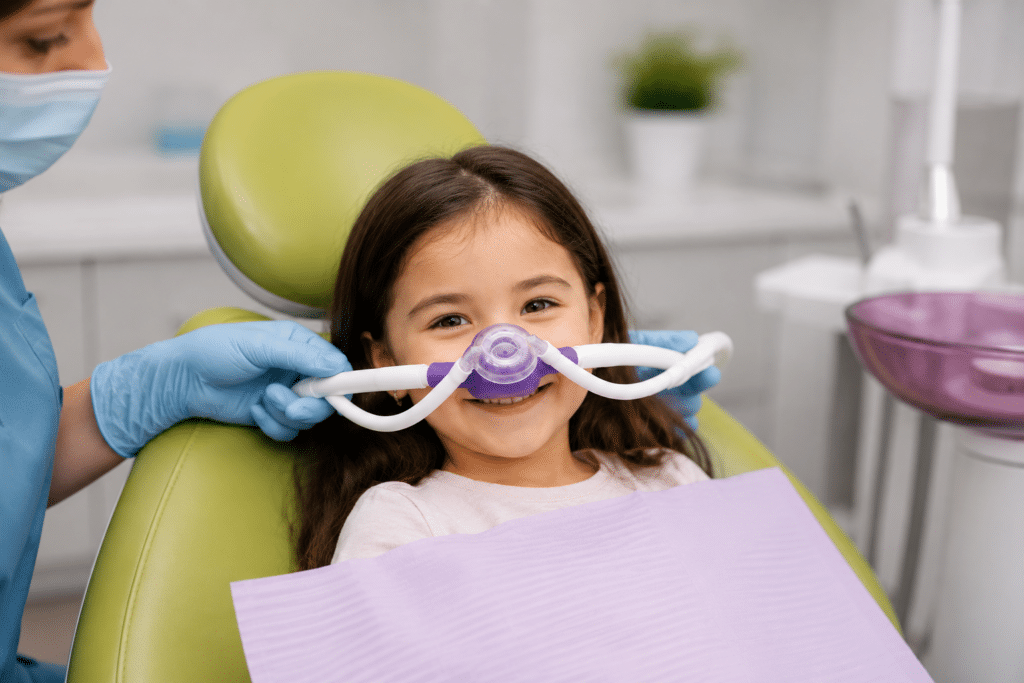
Nitrous oxide, also called laughing gas, helps children feel calm and relaxed. Dentists deliver this colorless, odorless gas through a small nosepiece that fits comfortably over the child’s nose. They breathe normally.
Within three to five minutes, most kids describe feeling warm, floaty, and relaxed. Some giggle. Some just go quiet and calm.
It doesn’t put them to sleep. They stay fully awake, can hear everything, respond to instructions, and communicate with the dentist throughout.
This quick recovery is one of nitrous oxide’s biggest advantages. Children do not feel groggy afterward, and they do not need an IV or intensive monitoring. After the procedure, we give your child 100% oxygen for a few minutes to help remove the nitrous oxide from their body. By the time they’re out of the chair, most kids feel completely back to normal.
| Feature | Nitrous Oxide (Laughing Gas) | Oral Sedation | General Anesthesia |
|---|---|---|---|
| Onset | 3–5 minutes | 30–60 minutes | Immediate (IV) |
| Consciousness | Fully awake | Drowsy/light sleep | Fully unconscious |
| Recovery time | Near-instant | 2–4 hours | 4–8+ hours |
| Setting | In-office | In-office | Hospital/surgical center |
| Ideal for | Mild to moderate anxiety | Moderate anxiety or longer procedures | Severe cases or special needs |
Is Laughing Gas Actually Safe for Kids?
Yes, Nitrous oxide has been used in pediatric dentistry since the 1970s. The American Academy of Pediatric Dentistry (AAPD) endorses it as a safe, effective, and well-studied sedation option for children. Because the concentration of nitrous used in dental settings is low (typically 30–50% nitrous, 50–70% oxygen), there are no lasting effects on the brain, liver, or organs. It’s non-addictive, doesn’t accumulate in the body, and clears completely with the oxygen flush at the end. [2]
Side effects are mild and uncommon, including occasional nausea if the dose is too high or mild headache. Both resolve within minutes.
Some children and teens may not qualify for nitrous oxide. Severe breathing problems, certain nasal blockages, and pregnancy during the first trimester can affect whether this option is appropriate. That’s why we always review medical history before treatment.
When Should a Parent Actually Ask About Laughing Gas?
If your child has ever done any of the following at a dental visit, laughing gas is worth a conversation:
- Crys throughout the dental appointment
- Becomes very tense or fearful when dental instruments are used
- Refuses to sit in the dental chair
- Shows signs of dental anxiety or distress during visits
- Has difficulty staying calm or cooperative during treatment
- Feels nervous even before a dental appointment begins
- Is attending their first dental visit and may benefit from extra comfort and relaxation
- Could benefit from a more positive dental experience to build confidence for future appointments
At Smiley Faces Dental, we offer nitrous oxide to children who show signs of dental anxiety. We can use it even during a child’s first visit.
What Happens During a Nitrous Appointment at Smiley Faces Dental?
The process is straightforward. Before anything starts, we review your child’s health history and confirm they’re a good candidate for nitrous oxide.
Next, we place a small, child-sized nosepiece over your child’s nose. Many nosepieces come in fun scents like bubblegum or watermelon. These scents can help anxious children feel more comfortable.
We titrate the gas slowly, meaning we start low and increase gradually until your child is comfortable. There’s no guesswork. We’re watching their response the whole time.
During the procedure, they stay awake and can talk to us. Most kids describe feeling like they’re floating or like their hands are “tingly.” Some just feel calm and don’t say much. Either way, they’re relaxed enough to tolerate what would otherwise feel unbearable.
After we switch back to oxygen, the effects wear off in minutes. They can eat, drink, and go back to school the same day, no restrictions, no recovery nap needed.
FAQ: Laughing Gas for Kids at the Dentist
1. Is laughing gas safe for a 3-year-old?
Children as young as 2 years old can safely receive nitrous oxide. A trained pediatric dental team carefully manages the amount used.
2. Will my child be asleep during the procedure?
No. Laughing gas produces relaxation and mild sedation, but your child stays fully awake and conscious. They can hear, speak, and respond throughout the entire visit.
3. How long does the effect last after the appointment?
After the visit, most children feel completely back to normal within minutes, with no grogginess and no restrictions on eating or activity.
4. What if my child is afraid to wear the nosepiece?
That’s normal. We introduce the nosepiece gradually and let children get comfortable with it. If it doesn’t work, we can discuss other sedation options.
5. Can dentists use laughing gas for routine cleanings, or do they bigger procedures?
Dentists can use laughing gas for cleanings, exams, and more complex procedures. If your child feels anxious during a cleaning, laughing gas can help.
6. My child has asthma. Is laughing gas still safe?
Nitrous oxide contains extra oxygen and is gentle on the respiratory system. We check your child’s health history before deciding if it is the right option.
Your Child Doesn’t Have to Dread the Dentist
Dental fear is common, but it does not have to shape your child’s future dental experiences. With the right support and, in some cases, laughing gas, many children who once struggled during cleanings can sit calmly through treatment.
If your child struggles during dental visits, or if you’ve delayed care because you don’t know how to make it easier, we’re here to help. At Smiley Faces Dental in Corona, NY, our team has helped anxious children enjoy calmer and more positive dental experiences for years.
Call us or book an appointment. We’re at 35-38 Junction Blvd., Suite B, Corona, NY 11368, and we’re open Monday through Saturday, 10 AM to 5 PM.
Sources
[1] Baniasadi K, et al. “Global prevalence of early childhood dental fear and anxiety: A systematic review and meta-analysis.” Journal of Dentistry, 142, 104841. January 2024.
https://www.sciencedirect.com/science/article/pii/S0300571224000113
[2] American Academy of Pediatric Dentistry. “Use of Nitrous Oxide for Pediatric Dental Patients.” The Reference Manual of Pediatric Dentistry. Chicago, IL: AAPD; 2024–2025.
https://www.aapd.org/media/Policies_Guidelines/BP_UseofNitrous.pdf